A solid rubber wheel can look stable on a bench but wobble after installation. This matters when it supports a guide frame moving across a floor.
Solid rubber wheels can wobble when hub alignment, wheel runout, axle or bearing play, or the installed frame changes the rotating path. Check the wheel loose, then repeat the test on the installed guide frame.
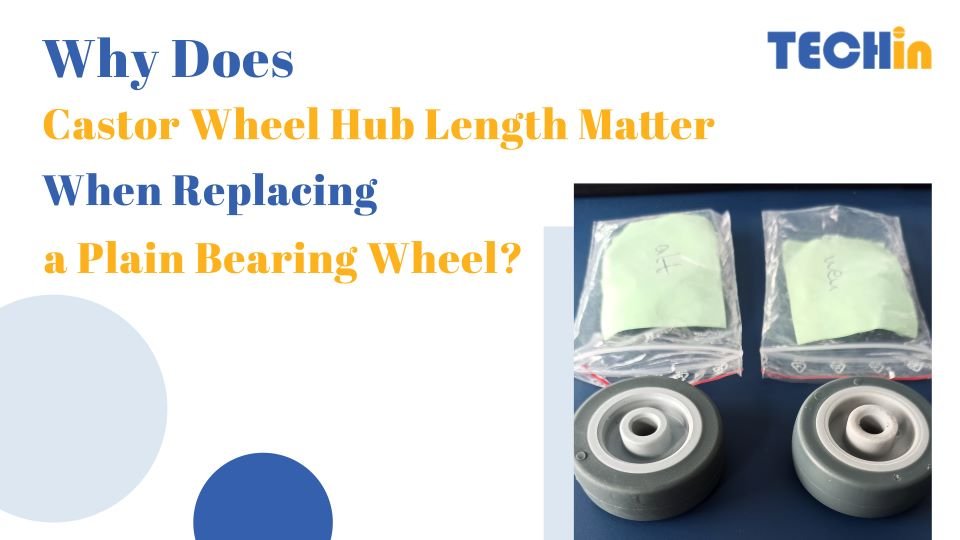
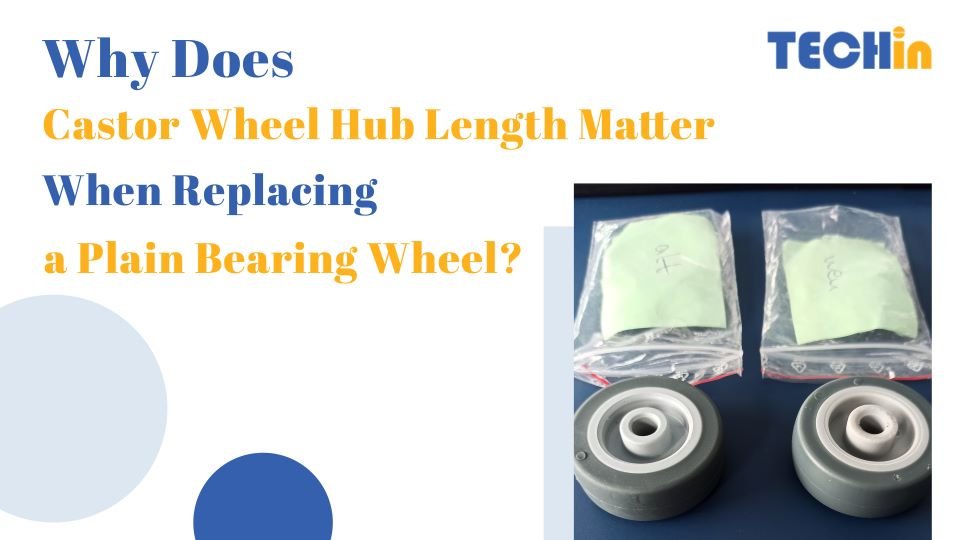
A customer reported wobble from a 125 mm solid rubber wheel on a concrete-grinder guide frame. The supplied video showed wobble during use. Two photos showed the hub inclined relative to the rim. We separated hub-to-rim alignment, radial runout, lateral runout, and axle or bearing end play.
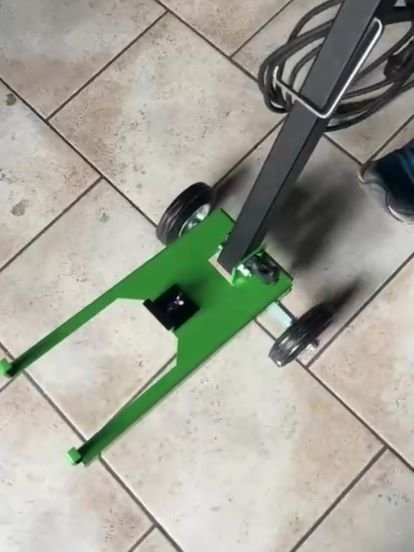
Installation changes the test. A wheel that looks stable by hand may behave differently after mounting. Axle fit, spacers, frame geometry, floor contact, and movement can affect the rotating assembly. The checks below separate the wheel from the installation.
How Can Hub Alignment Create Wheel Wobble?
Misalignment between the metal rim and rubber wheel can tilt the hub axis. As the wheel turns, this may appear as side-to-side movement. A photo shows the direction of movement, but not whether the cause is rim alignment, a bent part, axle play, or a mounting error.
Start with a slow visual check. Mount the wheel on a straight reference axle and turn it by hand. View the hub shoulder, rim edge, and sidewall from more than one angle. If the hub looks inclined, record it before changing the axle or tightening the hardware.
In this case, the hub-to-rim relationship was the first check. The customer’s suspicion of excessive axle play was not treated as a confirmed cause. These conditions need separate measurements.
How Can Buyers Separate Runout from Axle Play?
Runout is the change in a rotating surface’s position. Radial runout moves towards and away from the centre; lateral runout moves side to side. Concentricity and perpendicularity help describe why a hub may not rotate squarely. Technical inspection systems measure these conditions during rotation.[1]
Use this decision path before requesting a replacement:
| What you see | What to check | What the result helps you decide |
|---|---|---|
| Hub appears inclined in the rim | Hub-to-rim alignment and perpendicularity | Whether the wheel assembly starts with a geometric skew |
| Wheel moves side to side as it rotates | Lateral runout at the wheel side reference | Whether the rotating assembly has axial movement |
| Wheel rises and falls as it rotates | Radial runout at the tread or rim reference | Whether the wheel is out of round or eccentrically mounted |
| Hub or wheel moves on the axle | Axle, bearing, bushing fit, and end play | Whether play is coming from the support interface |
Do not copy a tolerance from another wheel or vehicle. Agree the measuring point, gauge method, load condition, and pass limit for the actual application.
Which Wheel Inspection Records Should a Supplier Provide?
For a production order, ask for a short record covering:
- wheel diameter, tread width, hub bore, hub length, and the relevant axle or bearing fit;
- the reference points used for radial and lateral runout;
- the agreed runout and end-play limits for the application;
- the installed test condition, including mounting method and representative equipment load;
- the measured result, sample identification, and disposition of any failed sample.
Supplier-ready question: Please show how you measured hub alignment, radial runout, lateral runout, and axle end play on the assembled wheel.
A general statement that the wheel passed inspection does not show what was checked.
Conclusion
Check hub-to-rim alignment, radial and lateral runout, and axle end play separately. Then repeat the test on the installed guide frame under representative working conditions.