A castor may look strong, but rust on one brake spring can quickly cause complaints and raise doubts about the brake.
Brake springs rust when their material or coating cannot handle rain, cleaning water, and repeated brake movement. For outdoor furniture castors, buyers should check the spring separately from the wheel, housing, and load rating.
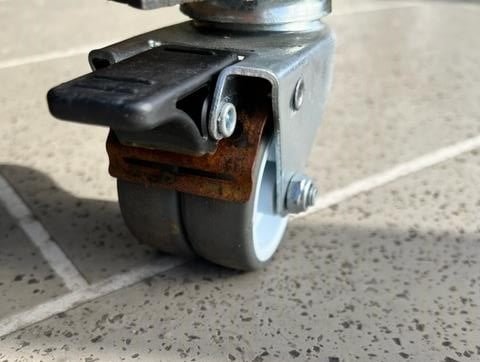
Visible rust around the brake spring area on small braked furniture castors after outdoor use.
A customer contacted us after end users found rust around the small black brake spring after a short period of outdoor use. During our follow-up, we confirmed that the castors were fitted to leisure furniture used mainly in gardens, balconies, and terraces. The main exposure was rainwater and cleaning water.
We then reviewed the customer’s side-by-side check of the affected castors, a standard model, and an older approved sample. Under the same short saltwater check, only the affected brake spring showed clear rust. Based on that comparison, we changed the spring finish to black spray coating for later production to give it better protection in wet outdoor use.
Why can a brake spring rust before the castor housing?
Small brake parts are easy to overlook during castor approval. That is where the risk starts.
A brake spring can rust before the castor housing because its bends, edges, holes, and rubbing points are harder to coat evenly.
The housing may have a stable plated or galvanised finish. The brake spring is a separate stamped or formed metal part. If the spring is coated before bending, the coating can thin or crack at the bend. If it is coated after forming, sharp edges and recessed areas may still receive less protection.
The spring moves every time the brake is used. It is pressed, released, and rubbed near the brake pedal. If water remains around the contact area, rust can start sooner than buyers expect.
For outdoor furniture castors, the spring is not a minor part. Rust can affect appearance, user confidence, and brake reliability.
How do outdoor furniture conditions affect brake spring corrosion?
Outdoor furniture does not stay dry like equipment used inside a warehouse. Its castors regularly come into contact with water.
Gardens, balconies, and terraces expose castors to rainwater, cleaning water, humidity, and drying cycles. These conditions can attack weak brake spring coatings even when the castor is not used on beach sand. Outdoor castor guidance also treats weather, humidity, and washability as selection factors.
A leisure chair may stand on tiles, decking, concrete, or a balcony floor. It may be washed, left wet after rain, or stored in a damp corner. A dry brake check can show that the pedal locks and releases. It cannot show how the spring will resist repeated wet and dry conditions.
Buyers should assess the wheel material and the brake hardware separately. The tyre may protect floors, reduce noise, or improve rolling comfort. It does not protect the metal brake spring from rust.
The purchase specification should state whether the castor will meet rain or cleaning water. The supplier needs this information before the buyer approves a sample.
Which brake spring coating and material details should buyers check?
A black finish may look protective, but colour alone says little about corrosion resistance.
Buyers should check the spring material, coating method, coating thickness, adhesion, and coverage around bends and edges. The key question is whether this protection will remain in normal outdoor use.
Ask the supplier these practical questions:
- Is the brake spring made from a material suitable for damp outdoor use?
- Is the surface treatment black coating, spray paint, e-coating, galvanised finish, or another system?
- Is the coating checked after the spring is formed?
- Are edges, slots, and contact points protected?
- Does the brake spring still work smoothly after corrosion exposure?
For EU buyers, chemical compliance and corrosion resistance are separate checks. REACH is the main EU chemicals law. However, a REACH-related material check does not show whether a brake spring coating will resist rainwater or cleaning water.[1]
How can buyers reduce brake spring rust in repeat castor orders?
Repeat orders should not rely only on the first approved sample. Small material or process changes can affect the spring.
Buyers can reduce rust risk by stating the wet-use conditions, defining the spring finish, keeping an approved sample, and checking the brake before repeat orders.
Before approving outdoor furniture castors, use a simple buyer checklist:
- Where will the furniture be used: indoor, garden, balcony, terrace, or coastal area?
- Will the castors contact rainwater or cleaning water?
- Is the brake spring coated after forming, or can bending damage the coating?
- Is there a retained sample for comparison?
- Does the brake pedal still release smoothly after wet exposure?
- Are the coating and brake checks written into the purchase specification?
This matters to distributors, wholesalers, hardware retailers, and furniture brands in Europe. End users may not know the coating details, but they quickly notice rust on a visible brake part.
The practical lesson is simple. For outdoor castors, the brake spring needs its own requirement in the approval standard.
Conclusion
For outdoor furniture castors, specify the spring finish, wet-use conditions, approved sample, and brake check after water exposure before placing an order.
Useful Resources
References
- European Commission, REACH Regulation overview.