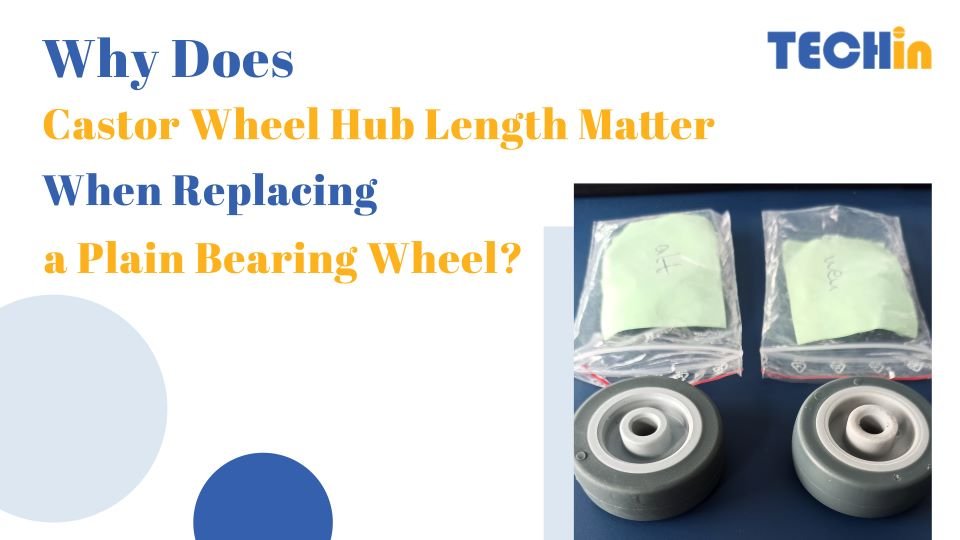
A replacement wheel can match the diameter and still fail in the assembly. A small hub-length difference can change axle fit, side clearance, and wheel movement.
Hub length matters because it controls how the wheel sits between the fork or housing plates. Match it with bore size, wheel width, bearing type, axle, washers, and spacers before approving a replacement castor wheel.
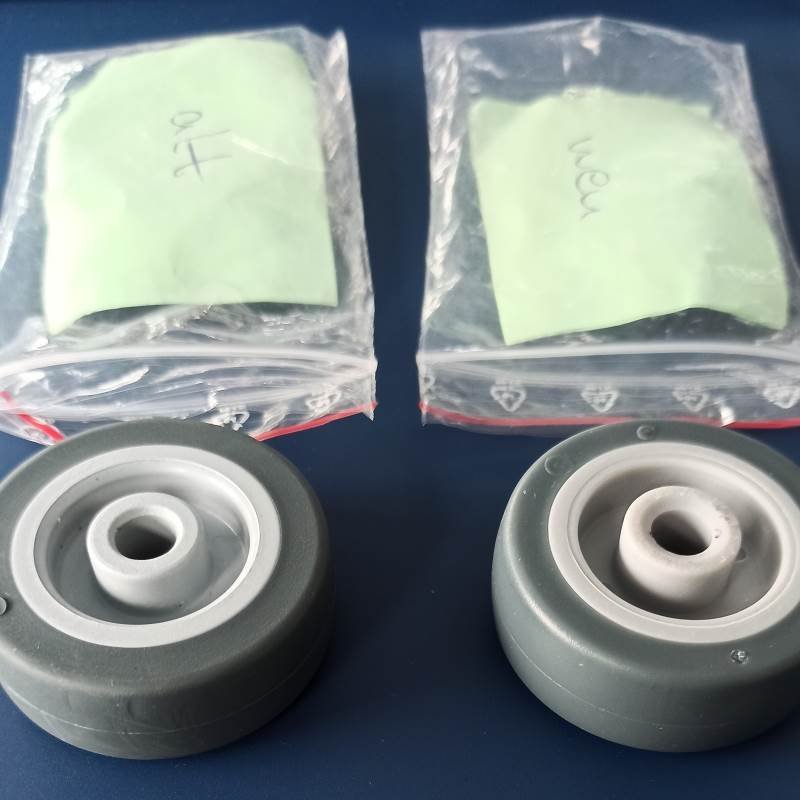
Two wheel samples shown side by side for a hub comparison.
A customer contacted us after a 40 x 18 mm TPR single wheel with a plain bearing did not fit the application as expected. The required hub length was 20.5 mm, while a comparison sample measured 22.5 mm. The customer clarified that this dimension was critical. We reviewed the samples and measurement photos, reinforcing one buyer lesson: treat hub length as a named replacement-wheel dimension.
What Is Hub Length on a Castor Wheel?
Hub length is the distance through the wheel hub between its two side faces. It is different from bore size and overall wheel width. In a plain-bearing wheel, a sleeve or bushing supports the axle through the hub. Hamilton separates hub length from bore size in its castor measurement FAQ.[1]
Buyers should record these dimensions separately:
- Bore size: the hole diameter for the axle or bushing.
- Hub length: the distance between the hub side faces.
- Wheel width: the overall width of the wheel body or tread.
- Bearing type: plain, roller, or ball bearing.
Blickle also treats diameter, bore, wheel width, and hub length as separate wheel dimensions in its basic castor definitions.[2]
Why Can a 2 mm Difference Stop a Wheel Assembly?
A 2 mm difference can matter when the fork cavity, axle, washers, and spacers were designed around the original hub length. A longer hub may press against the fork or leave too little room for the washer stack. A shorter hub may create excess lateral movement.
The exact effect depends on the housing geometry and axle arrangement. The case difference between 20.5 mm and 22.5 mm was therefore a fit issue, not a cosmetic variation.
How Should Buyers Measure a Replacement Wheel?
Measure the existing wheel and assembly, then compare the results with the supplier drawing. Reids Castors lists hub length and bore as separate wheel specification fields.[3]
- Expose both hub side faces.
- Measure bore size with a digital caliper.
- Measure hub length between the two hub faces.
- Measure wheel diameter and overall width.
- Record the bearing, sleeve, axle, washers, spacers, and fork clearance.
- Photograph the wheel beside the caliper and keep the record with the drawing.
Do not estimate hub length from wheel diameter or tread width. If the old wheel is damaged, measure the assembly as well.
What Should the Purchase Specification Include?
State the complete wheel interface, not only the material and diameter:
- single wheel, plain bearing, and intended equipment use;
- wheel diameter, overall width, bore size, and hub length;
- agreed hub-length tolerance;
- bearing or sleeve type;
- axle diameter, washers, spacers, and fork or housing clearance;
- TPR material and relevant application limits.
Before approval, test-fit the sample with the intended axle. Confirm that it is centred, turns freely, and does not bind when tightened.
Conclusion
Hub length is a fit dimension, not a secondary catalogue detail. Specify and measure it with bore, width, bearing, axle, and fork clearance before approving a replacement castor wheel.
References
- Hamilton, Castor measurement FAQ. back
- Blickle, Basic information and definitions. back
- Reids Castors, Wheel hub and bore specifications. back