A castor package can look dry while red rust develops on its threaded stem. The steel fitting and exposure history matter more than outer packaging.
First check the steel thread protection and any earlier moisture exposure. Compare the rust pattern, finish specification, approved sample, and packing conditions.
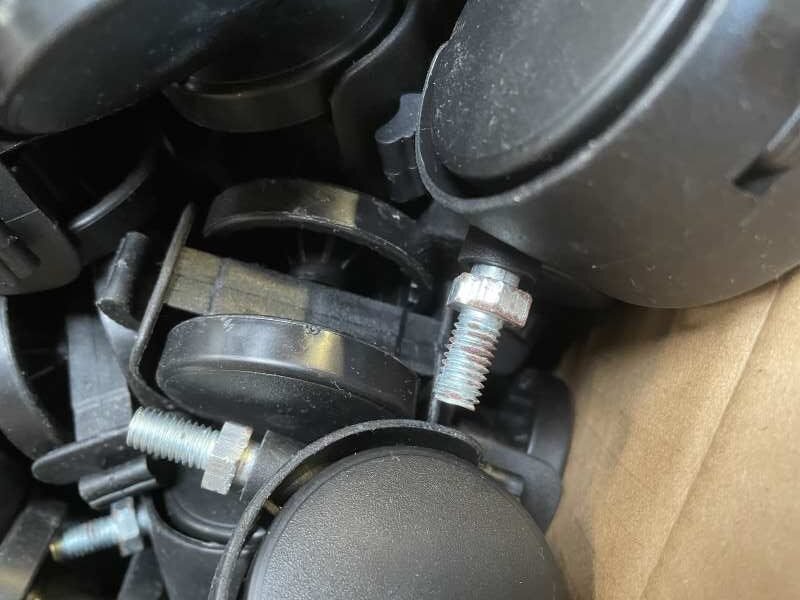
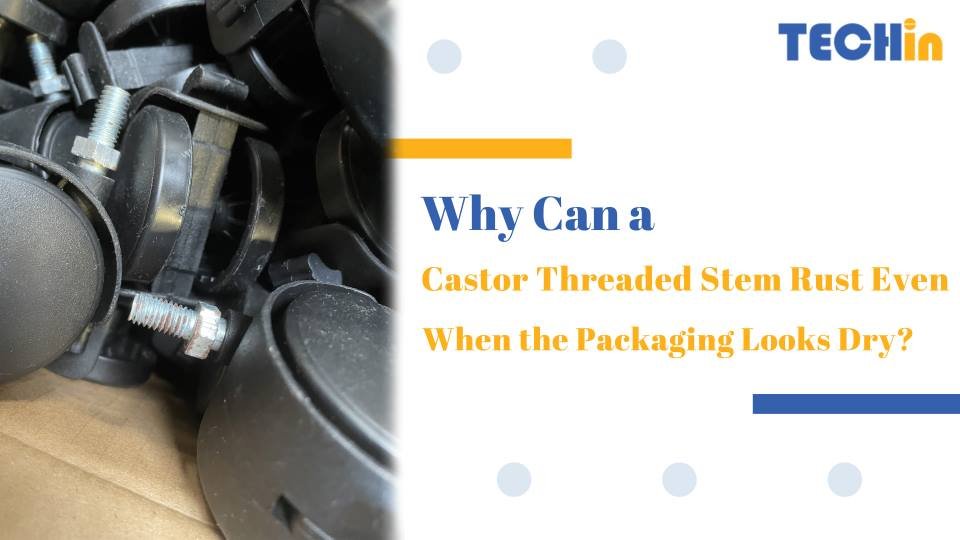
Red-brown rust is concentrated on the threaded stem and nut of a small braked furniture castor.
A customer contacted Techin Castor after finding rust on the threaded stems of small black nylon castors with brakes. The customer said the cartons were dry. We reviewed the photographs and inspection records, then separated the threaded-finish question from earlier moisture exposure.
Why does a threaded stem corrode before the rest of a castor?
The threaded stem can rust first because its shape is harder to protect evenly than a flat steel surface. The nylon wheel cannot form red rust, but the steel stem and nut can. The finish must cover the thread peaks, roots, end face, and area under the nut.
Thin coverage, pores, or small breaks can expose the steel to moisture. Assembly can add damage when the nut rubs against the thread or tools mark the surface. ISO 4042 covers electroplated coating systems for steel fasteners, including zinc and zinc alloy systems with sealants and top coats.[1] Specify the threaded-stem finish more clearly than “zinc plated”.
Can a dry carton rule out moisture related corrosion?
No. A carton that is dry when opened does not show whether the castors faced earlier condensation or trapped moisture. Temperature changes can create condensation on metal parts, while closely packed surfaces can retain moisture and later appear dry.
The American Galvanizers Association explains that closely packed zinc-coated surfaces can retain moisture and receive too little airflow for normal drying.[2] This reference concerns galvanised steel, not this exact castor case. The buyer lesson is narrower: current carton appearance cannot describe the complete moisture history.
For sea freight or long storage, check whether parts were dry before packing and whether the packaging matched the route and storage period. Moisture barriers, desiccants, inhibitor materials, or ventilation may suit different situations.
How can buyers decide which risk to check first?
Use the location and distribution of rust to choose the first technical check. The pattern does not prove the cause, but it keeps the review focused.
| What the buyer sees | First risk to check | Practical next check |
|---|---|---|
| Rust in thread roots or under the nut | Uneven coating or rubbing | Compare affected and approved stems |
| Rust on several metal parts in one pack | Earlier moisture or unsuitable packing | Review drying, inner packaging, route, and storage |
Photograph several castors, including thread roots, the nut contact area, housing, wheel, brake, and inner packaging. Compare new and affected stems under the same lighting. If testing is needed, use the same exposure and evaluation rules for both samples.
What should buyers specify to prevent rust?
Treat the threaded stem and nut as separate metal components. Define:
- Finish: Name the coating system and any sealing or top-coat requirement.
- Appearance: State whether red rust, bare areas, or tool marks are acceptable around thread roots and under the nut.
- Corrosion test: Name the method, exposure period, evaluation method, and pass criteria. ISO 9227 provides salt-spray procedures, but does not set the result for every castor.[3]
- Packing: Require parts to be dry before packing and define route-specific moisture control.
- Inspection: Include thread roots and the nut contact area in the sampling plan.
Conclusion
A dry carton does not rule out threaded-stem rust. Define the stem and nut finish, corrosion criteria, dry before packing rule, moisture controls, and incoming inspection points.
References
- International Organization for Standardization, ISO 4042:2022 – Fasteners – Electroplated coating systems.
- American Galvanizers Association, Wet Storage Stain.
- International Organization for Standardization, ISO 9227:2022 – Corrosion tests in artificial atmospheres – Salt spray tests.