Rust on a castor housing can delay resale, create rework, and weaken confidence in a finish that looked suitable on paper.
Specify corrosion resistance by environment, complete coating system, post-riveting protection, test method, packaging, and visible acceptance criteria—not by the words zinc plated alone.
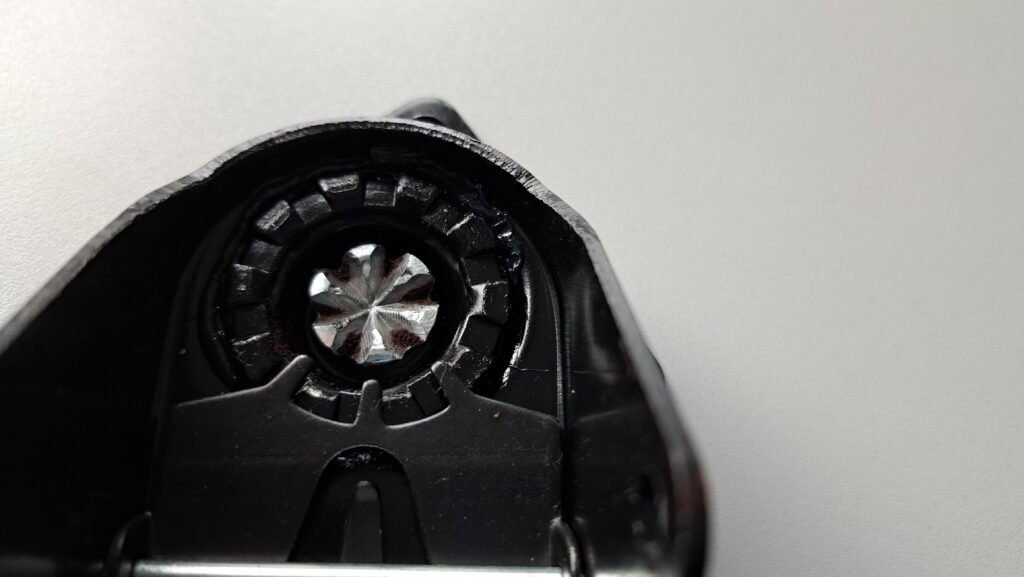
Reddish-brown corrosion spots around the central mounting interface.
A customer contacted Techin Castor after finding reddish-brown spots around the zinc-plated mounting area of a batch of twin-wheel castor housings. We reviewed the report and photograph, then communicated a direction to apply anti-rust oil to the riveting area. The customer acknowledged that direction. The practical buyer lesson is to define the complete corrosion requirement before ordering.
What corrosion conditions must castors withstand?
Start with the environment, not the finish name. Record moisture, condensation, cleaning chemicals, salt, temperature, outdoor exposure, and storage duration.
The same zinc-plated housing may suit a dry indoor application but need a different protection system for washdown, coastal air, or long-term warehouse storage. ISO 14713-1 connects zinc-coating corrosion resistance with design and exposure conditions.[1]
| Buyer condition | Main corrosion risk | Specification direction |
|---|---|---|
| Dry indoor use | Occasional humidity and visible finish damage | Define the zinc finish, visible-area acceptance, and assembly protection |
| Humid storage or condensation | Moisture held at joints, edges, or packaging contact points | Add passivation or sealer requirements, post-assembly protection, and dry-packaging controls |
| Washdown, chemicals, or salt exposure | Repeated corrosive contact and trapped residues | Compare stainless steel or a higher-protection system; confirm chemical compatibility for the complete castor |
| Long retail or warehouse storage | Moisture exposure before the castor reaches service | Define barrier packaging, desiccant or separation requirements where suitable, storage limits, and incoming inspection |
Do not select a finish from the wheel material alone. The housing, mounting plate, rivets, brake hardware, and bearings may face different risks.
Which castor components need separate corrosion requirements?
The complete castor needs a component-level specification. A corrosion-resistant wheel does not make a zinc-plated housing suitable for a wet application.
| Component | Buyer should define | Why it matters |
|---|---|---|
| Housing and mounting plate | Base material, coating system, minimum thickness, visible-area limits, and edge or hole coverage | This is the main structural and visible metal surface |
| Rivets and washers | Material compatibility, surface finish, exposed-head condition, and post-riveting protection | Riveting can disturb local protection or create a moisture-holding interface |
| Brake hardware, if fitted | Finish, spring protection, movement after exposure, and cleaning compatibility | Corrosion can affect both appearance and brake return |
| Wheel and bearing | Tyre or wheel material, bearing seals, chemical compatibility, and washdown limits | The wheel and bearing can fail for different reasons from the housing |
ASTM B633 separates zinc-coating requirements into areas such as thickness, supplementary finish, appearance, adhesion, and corrosion resistance. It is a useful reference when a buyer needs more than a colour description.[2]
Ask the supplier to identify which requirements apply to the finished castor and which apply only to a separate plated component. This prevents a good test result on an unassembled part from being treated as proof for the complete product.
What should a zinc-plated castor specification include?
Write the requirement in seven parts:
- Application environment: State indoor, humid, washdown, outdoor, coastal, chemical, or other exposure.
- Materials: Identify the housing, mounting plate, rivet, washer, brake, wheel, and bearing materials where corrosion compatibility matters.
- Coating system: State the zinc process, minimum coating thickness, passivation or sealer, and any restricted-substance or market requirement.
- Assembly condition: Ask the supplier to state the plating and riveting sequence, exposed metal risk, and post-riveting protection.
- Test method: Name the agreed salt-spray or other corrosion method and identify the finished specimen.
- Acceptance criteria: Separate white corrosion, red rust, bare steel, blistering, peeling, and unacceptable visible staining.
- Packaging and storage: Define moisture protection, separation, storage duration, and the inspection point before release.
A useful purchase requirement can read like this:
Supply the castor housing for [defined environment] with [defined substrate and coating system], minimum [agreed coating thickness], [agreed passivation or sealer], and protection for the finished riveting area. Test the finished assembly to [agreed method] for [agreed exposure period]. Accept only the agreed level of white corrosion and no visible red rust or exposed base metal on visible housing and mounting areas.
The bracketed fields are intentional. Buyers should agree the values with the application and supplier instead of copying a generic number into every order.
When should buyers choose stainless steel or another finish?
Choose stainless steel or another finish when the exposure, cleaning regime, appearance requirement, or expected service life exceeds the agreed zinc-plated system.
| Situation | Practical direction |
|---|---|
| Dry indoor equipment with limited moisture | A defined zinc-plated steel system may be suitable |
| Regular washdown or hygienic environment | Compare stainless steel castors and confirm the wheel, bearing, and fastener materials |
| Coastal, outdoor, or salt-contaminated exposure | Compare stainless steel or a higher-protection coating system using finished-assembly evidence |
| Chemical contact | Match the complete castor to the actual chemicals, concentration, temperature, and contact time |
| Appearance-critical retail stock | Set visible-area criteria and packaging controls, even when structural performance is the main concern |
Do not assume that a stainless housing makes every other component stainless. Ask for the material and finish of the full corrosion path.
How should salt-spray acceptance be written?
Name the method, specimen, exposure period, inspection points, and acceptance rule. The phrase passes salt spray is not a complete requirement.
ISO 9227 describes neutral salt spray, acetic acid salt spray, and copper-accelerated acetic acid salt spray procedures. It also states that the standard does not set the exposure period for a particular product or predict long-term corrosion resistance.[3]
Before approving a test request, confirm:
- the exact coating and passivation or sealer;
- whether the specimen is a plated component or a finished castor;
- the mounting orientation and exposed interfaces;
- the exposure period and inspection intervals;
- the definitions of white corrosion, red rust, base-metal corrosion, blistering, and peeling;
- the sample quantity and whether samples represent the production process;
- what happens when the housing passes but the riveted interface fails.
Use salt spray as one controlled comparison or process check. Do not use a test-hour number as a promise of field life without application evidence.
Conclusion
Specify the environment, complete coating system, post-riveting protection, finished-assembly test, packaging controls, and red-rust acceptance before comparing castor quotations.
Related Reading
References
- International Organization for Standardization, ISO 14713-1:2017 — Zinc coatings: general principles of design and corrosion resistance.
- ASTM International, ASTM B633 — Standard Specification for Electrodeposited Coatings of Zinc on Iron and Steel.
- International Organization for Standardization, ISO 9227:2022 — Corrosion tests in artificial atmospheres: salt spray tests.