Are you struggling with noisy, floor-damaging wheels on your equipment? Choosing the right wheels is crucial for smooth operations, but the wrong choice can lead to costly floor repairs and disruptions.
Rubber wheels offer excellent floor protection, noise reduction, and a smooth, cushioned ride due to their softer treads. They are a versatile and cost-effective choice for a wide range of applications, from light-duty carts to heavy-duty industrial equipment, ensuring both performance and comfort.
As a manufacturer with 20 years in the caster industry, I’ve seen firsthand how the right wheel can make all the difference for my clients, from large distributors in Germany to hardware supermarket buyers in Italy. Many of my long-term customers, who have been with us since the beginning, still prefer rubber wheels. They trust their reliability and performance, and frankly, so do I. It’s often the first recommendation I make, especially when functionality and tradition are key considerations. Let’s dive deeper into why rubber wheels might be the perfect solution for you.
What are rubber wheels?
Feeling frustrated by wheels that scratch your floors and make a racket? You need a solution that’s gentle on surfaces and operates quietly, especially in environments where noise is a major concern.
Rubber wheels are made from natural or synthetic rubber and are known for their ability to absorb shock and reduce noise. This makes them an excellent choice for protecting floors and ensuring quiet operation in places like hospitals, offices, and warehouses.
In my experience, the core of the wheel is just as important as the rubber itself. We often mount the rubber onto a metal or plastic core. This combination provides the perfect balance of a soft, protective tread with a strong, durable center. I remember working with a client, who was very particular about quality but also needed to manage his budget. We developed a custom rubber wheel with a reinforced polymer core that met European standards and came in under his target price. It’s this kind of problem-solving that has kept our partnership strong for over a decade. The right wheel isn’t just about the material; it’s about the thoughtful engineering behind it.
What are the benefits of rubber wheels?
Are your current caster wheels failing to provide a smooth ride for your valuable equipment? Shocks and vibrations can damage sensitive cargo and lead to costly replacements, impacting your bottom line.
Rubber wheels offer superior shock absorption, protecting both the items being transported and the equipment itself. Their natural flexibility allows them to cushion the ride, even over uneven surfaces, ensuring a secure and smooth journey for your goods.
I always tell my clients that the benefits of rubber wheels go beyond just a smooth ride. One of the biggest advantages is floor protection. Unlike harder materials like steel or nylon, rubber is gentle on surfaces like hardwood, tile, and vinyl, preventing scratches and scuffs. This is a huge selling point for customers in the hospitality and medical industries. Furthermore, rubber provides excellent traction, which is a key safety feature, especially on surfaces that might be slippery. This firm grip prevents carts from sliding and reduces the risk of accidents, a critical consideration in busy warehouses or manufacturing facilities. The quiet operation is another significant plus, making them ideal for noise-sensitive environments like libraries and hospitals.
What are the advantages of rubber wheels?
Are you looking for a wheel solution that is not only effective but also versatile and budget-friendly? Many high-performance wheels come with a high price tag, forcing you to compromise on quality or features.
Rubber wheels provide a fantastic combination of performance and cost-effectiveness. They are incredibly versatile, suitable for a wide range of applications and environments, from indoor office use to outdoor industrial settings, making them an all-purpose, economical choice.
When I talk to purchasing managers like Hans from Germany, they are focused on long-term value and reliability. While rubber wheels have many strengths, it’s important to be transparent about their characteristics compared to other materials.
| Feature | Rubber Wheels | Polyurethane (PU) Wheels | Nylon Wheels |
|---|---|---|---|
| Floor Protection | Excellent, non-marking options available | Very good, non-marking | Can scratch floors |
| Noise Level | Very quiet | Quiet, but more noise than rubber | Noisy |
| Shock Absorption | Excellent | Good | Poor |
| Traction/Grip | Excellent | Good | Fair |
| Durability | Good, but can wear faster than PU | Excellent, very durable | Excellent, very durable |
| Load Capacity | Good, but lower than PU or Nylon | Excellent, high load capacity | Excellent, high load capacity |
| Chemical/Oil Resistance | Generally poor, special types needed | Excellent | Excellent |
| Cost | Cost-effective | More expensive than rubber | Varies, often cost-effective |
One of the key advantages of rubber is its high friction coefficient, which means it grips surfaces well and is less likely to slip, making it ideal for drive wheels. They also dissipate heat better than polyurethane, allowing them to handle higher speeds. However, they are less resistant to wear, cuts, and oils compared to materials like polyurethane and nylon. For a client like Hans, who needs heavy-duty casters for material handling equipment, we might suggest a specialized elastic rubber that offers a higher load capacity and durability, ensuring it meets Germany’s stringent DIN and EN standards.
What are the common types of rubber wheels?
Are you overwhelmed by the variety of rubber wheels and unsure which type is right for your specific needs? Choosing the wrong type can lead to poor performance and premature wheel failure.
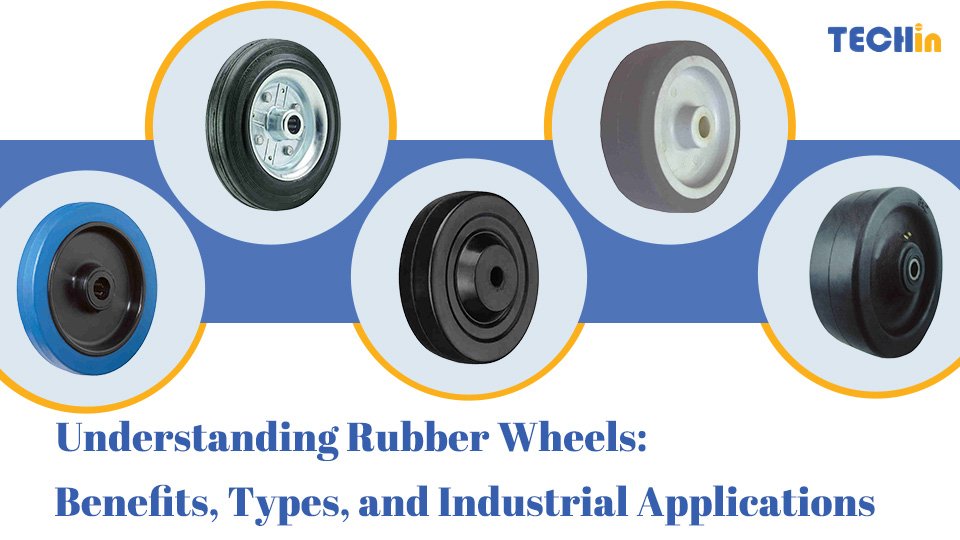
To select the best rubber wheel, it’s essential to understand the different types available. Each is designed for specific applications, from standard rubber for general use to pneumatic wheels for rough terrain, ensuring optimal performance and longevity for your equipment.
As a manufacturer, we offer a wide range of rubber wheels to meet diverse customer needs. Let’s break down the most common types we produce and their ideal uses:
Standard Rubber Wheels
These are the all-rounders. Typically made from solid black rubber, they are cost-effective and provide good floor protection and quiet operation. They are a popular choice for light to medium-duty applications. I find that our hardware supermarket clients often order these in smaller sizes (10-200mm) for general-purpose carts and dollies. The main drawback is that the black rubber can sometimes leave marks on clean floors.
Hard Rubber Wheels
These wheels have a higher load capacity than softer rubber options and are more durable. They roll more easily and are resistant to many chemicals and oils. This makes them suitable for industrial settings where durability is key. However, they provide less cushioning and are not as quiet as their softer counterparts.
Thermoplastic Rubber (TPR) Wheels
TPR wheels are a fantastic hybrid, blending the properties of rubber and plastic. They offer the cushioned, quiet ride and floor protection of a soft rubber wheel, but with the durability and chemical resistance of a harder wheel. They are also non-marking, which is a huge plus for clients in healthcare or retail.
Elastic Rubber Wheels
For applications requiring the best of the best in terms of a soft ride, elastic rubber is the premier choice. These wheels provide superior shock absorption and the easiest rolling experience among soft-tread wheels. They are incredibly quiet and gentle on floors, though they come at a higher price point. We often recommend these to clients like Hans for equipment that transports sensitive or fragile components.
Pneumatic Rubber Wheels
These are air-filled wheels, similar to a small tire. Their main advantage is unparalleled shock absorption, making them perfect for outdoor use or for moving loads over very rough and uneven surfaces. They are commonly used on wheelbarrows, garden carts, and heavy-duty outdoor trolleys. The downside is the risk of punctures and the need to maintain air pressure.
What are the Common uses of rubber wheels?
Are you unsure if rubber wheels are the right fit for your industry or specific application? Making the wrong choice can lead to inefficiency, damaged goods, and unsafe working conditions.
Rubber wheels are incredibly versatile and are used across a wide range of industries due to their unique benefits. Their quiet operation, floor protection, and shock absorption make them an ideal choice for many commercial, industrial, and institutional environments.
Over my 20 years in this business, I’ve supplied rubber wheels for nearly every application imaginable. Here are some of the most common sectors where our clients find them indispensable:
Hospitals, Libraries, and Offices
In these environments, noise control is paramount. The sound-dampening quality of rubber wheels makes them the perfect choice for medical carts, hospital beds, library trolleys, and office chairs. They move silently, ensuring a peaceful atmosphere for patients, patrons, and employees. The non-marking feature is also crucial for protecting expensive flooring.
Warehousing & Material Handling
For moving goods in warehouses, rubber wheels are a go-to option for platform trucks, dollies, and pallet trucks. Their excellent grip prevents slipping, enhancing safety, while their shock absorption protects goods from damage during transport, especially over uneven concrete floors.
Manufacturing Plants
In manufacturing, equipment carts and assembly line trolleys are constantly on the move. Rubber wheels handle moderate loads while protecting factory floors. For clients like Hans in Germany, who manufactures material handling equipment, we provide heavy-duty, mould-on rubber wheels that offer high load capacity and extreme durability for their demanding production environment.
Retail and Commercial Spaces
Shopping carts and display units need to be moved easily and quietly to ensure a pleasant customer experience. Non-marking rubber wheels are perfect for this, as they glide smoothly across various flooring types without leaving scuffs.
Catering and Event Services
From room service trolleys in hotels to catering carts at events, quiet and smooth movement is essential. Rubber wheels ensure that service can be provided discreetly without disturbing guests, gliding effortlessly across carpets and hard floors alike.
How to Choose the Right Rubber Wheels?
Are you finding it difficult to select the perfect rubber wheel from all the available options? The wrong decision can lead to operational inefficiencies, safety hazards, and unnecessary replacement costs.
Choosing the right rubber wheel requires matching the wheel’s specifications to your application’s demands. You must consider factors like load capacity, floor conditions, wheel size, and the operational environment to ensure optimal performance, safety, and durability.
When a customer comes to me for advice, I walk them through a simple checklist to narrow down the best choice. This is the same process I’d use with a new buyer like Lenu or a seasoned manager like Hans.
First, calculate the load capacity. This is the most critical factor. Determine the total weight of your cart and its maximum load, then divide that by the number of wheels you’ll be using. I always recommend adding a safety margin of 25-30% to account for uneven surfaces or shock loading.
Second, assess your floor conditions and environment. Are the floors smooth, rough, or littered with debris? Are there oils, chemicals, or extreme temperatures involved? For delicate floors, a soft or non-marking TPR wheel is best. For rough concrete, a hard rubber or pneumatic wheel might be better.
Third, consider the wheel diameter. Larger wheels roll more easily over obstacles and cracks, making them ideal for uneven terrain. Smaller wheels offer better maneuverability in tight spaces and provide a lower profile.
Finally, think about the bearing type. Ball bearings provide the smoothest and easiest roll, which is great for frequent use or heavier loads. Plain bearings are more economical and suitable for lighter-duty, infrequent movement. I always explain these trade-offs so my clients can make an informed decision that balances performance with their budget.
Maintenance Tips for Rubber Wheels
Do you want to extend the life of your rubber wheels and avoid costly, unexpected replacements? Neglecting simple maintenance can lead to premature wear, reduced performance, and potential safety issues.
Proper maintenance is key to maximizing the lifespan and performance of your rubber casters. A routine of regular cleaning, inspection for damage, and proper lubrication will keep your wheels rolling smoothly and safely for years to come.
I always emphasize to my clients that a little bit of care goes a long way. Here are the practical tips I share with them to ensure they get the most out of their investment:
1. Regular Cleaning:
Dirt, dust, and debris are the enemies of a smooth roll. Clean your rubber casters regularly with a mild detergent and a soft cloth to remove any buildup on the wheels and axles. Avoid harsh chemicals, as they can degrade the rubber over time.
2. Inspect for Wear and Damage:
Periodically give your wheels a thorough visual check. Look for cracks, flat spots, or embedded objects in the rubber tread. Also, check the caster frame for any signs of bending or rust. Replacing a single damaged component early can prevent a bigger failure down the line.
3. Lubricate the Bearings:
To keep the wheels rotating freely and quietly, lubricate the bearings regularly. A silicone-based lubricant is often a good choice. Apply a small amount and spin the wheels to distribute it evenly. This simple step can significantly reduce friction and wear.
4. Check for Proper Alignment:
Ensure that the casters are mounted securely and are properly aligned. Misalignment can cause uneven wear on the wheels and make equipment difficult to steer. Tighten any loose bolts or brackets as needed.
5. Store Properly:
If the equipment will be stationary for a long time, try to avoid leaving it fully loaded, as this can cause flat spots on softer rubber wheels. Storing equipment in a clean, dry area away from extreme temperatures also helps preserve the rubber.
Conclusion
In summary, rubber wheels offer a versatile, quiet, and floor-friendly solution for countless applications. By choosing the right type and performing regular maintenance, you ensure long-lasting performance and reliability.