
A groove in a dust ring may look small, but it can create a quality question before a castor lot is accepted.
Buyers can check an industrial castor dust ring by understanding its purpose, confirming its material, comparing it with an approved sample, and separating appearance from measurement and function before ordering or releasing a new production lot with confidence for approval.
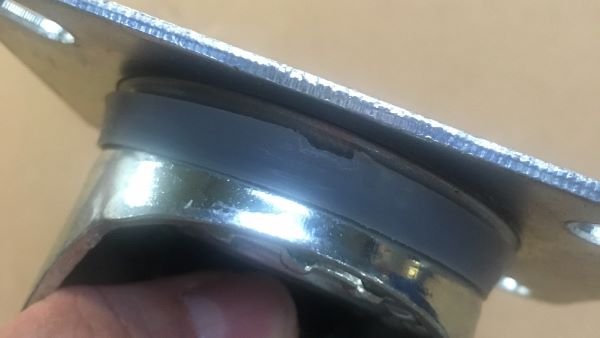
In one customer comparison of current and older castor samples, the customer reported a visible groove in the dust ring profile. The case does not by itself establish a general defect, but it shows why buyers should define appearance, measurement, and function as separate acceptance points.
What Is a Dust Ring and What Does It Do on a Castor?
Many buyers see the ring in a photo but are unsure which part they are checking or what it should do.
A dust ring is fitted around the castor housing. It may help cover the bearing or swivel area, but it is not automatically a waterproof seal.
The housing is the metal frame around the swivel or fixed mounting. Buyers should identify the complete castor, model, wheel variant, mounting type, and approved sample before comparing the ring. Its profile may be level, stepped, recessed, or shaped to match the housing. Compare the same area under similar light and viewing distance. A photo can show a groove or gap, but not prove its depth or the castor’s function. Ask what clearance the design requires and whether the ring is a working part or simply a cover. The next question is which material buyers should choose.
What Materials Are Commonly Used for Industrial Castor Dust Rings?
Material choice affects stiffness, wear, temperature range, and resistance to the working environment.
Common dust ring materials include steel, stainless steel, and engineering plastics such as PA or PP. The correct choice depends on the housing, bearing area, environment, and required fit.
Metal rings can offer strength and stable shape. Stainless steel may suit corrosive environments. PA or PP can reduce weight and suit moulded parts. Colour alone does not identify material, and a dust cover is not automatically the same part as a dust ring. Confirm the material name, profile or thickness requirement, working environment, and housing fit. If current and older samples look different, record the difference without assuming the cause. A ring, mould, trimming step, or assembly position may have changed. The next step is to define the incoming check.
What Should Buyers Check Before Ordering a Dust Ring?
A photo is useful for comparison, but it cannot prove that the ring meets a dimensional limit.
Compare the approved sample, full ring profile, material information, measurement need, and complete-castor function before accepting a new lot.
Use this short sequence:
| Check | Buyer action |
|---|---|
| Sample | Confirm the model, variant, revision, and approved reference. |
| Appearance | Compare the full ring under the same viewing conditions. |
| Material | Confirm the specified material instead of judging by colour. |
| Measurement | Define the datum, points, tool, and limit if fit matters. |
| Function | Check wheel movement, swivel movement, and clearance separately. |
ISO guidance on documented information supports controlled specifications, inspection plans, and change records.[1] Mitutoyo notes that caliper accuracy and calibration affect dimensional results.[2] If results disagree, hold the lot and ask for a written decision.
The ring should sit as intended by the housing design. Too much clearance may reduce protection, while a wrong position may cause rubbing or an uneven appearance. Check wheel movement, swivel movement, and clearance separately. A normal-function statement does not replace the appearance rule. Before approval, ask for the drawing or sample revision. Keep the photo, material statement, measurement method, and function result with the purchase record.
Conclusion
Know the ring’s purpose and material, compare it with an approved sample, and keep appearance, measurement, and function as separate checks.
Related Reading
References
- International Organization for Standardization, Guidance on documented information. back
- Mitutoyo, Calipers: Accuracy, Calibration & Calibration Accuracy. back