Skip to content
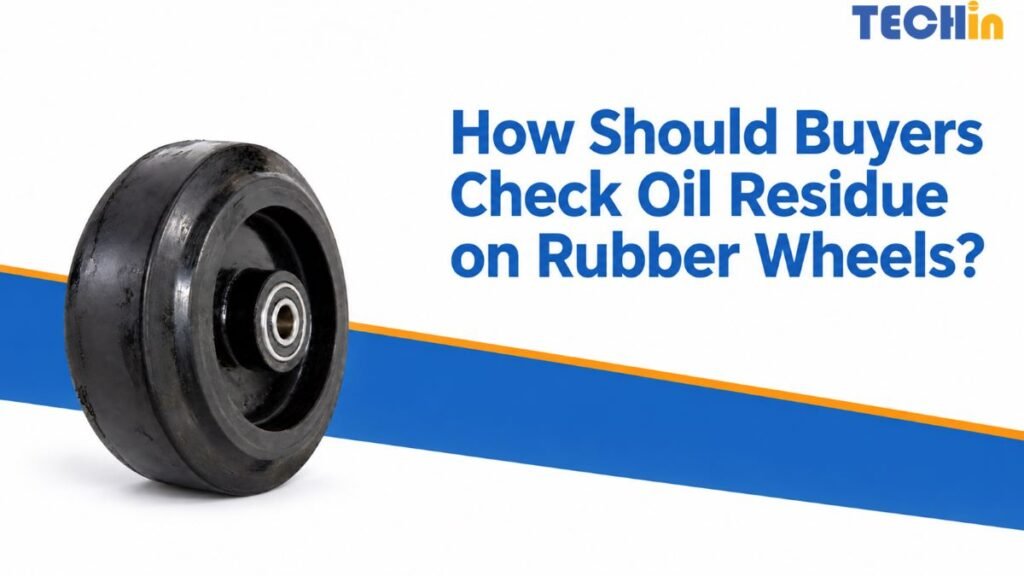
Oily rubber wheels can create avoidable cleaning work, handling delays, and uncertainty at goods receiving.
Buyers should define a clean surface, inspect a representative sample under controlled light, use an agreed wipe check, compare with an approved clean reference, and record a clear pass or fail before accepting the wheels.
A customer contacted Techin Castor after receiving rubber wheels with an oily surface. The customer said the oil could be cleaned locally, but the work was time-consuming. That feedback points to a simple sourcing lesson: surface cleanliness should be checked before shipment, not left as an informal warehouse task.
What does oil residue mean on a rubber wheel?
Oil residue is any unwanted film or transfer that remains on the wheel surface and changes the agreed clean condition.
A shiny patch, darker mark, greasy feel, or colour transfer onto a clean wipe may all justify further checking. These signs do not identify the chemical source. They only show that the surface does not match the agreed acceptance condition.
Contamination can also hide small surface damage on rubber goods. Polywater explains this general inspection risk in its guidance on cleaning rubber goods.[1] For that reason, a wheel should be checked before it is packed into a carton or released to the warehouse.
How should buyers define a clean rubber wheel?
Do not write only “clean rubber wheel” on a purchase order. Define what the inspector will see, touch, or record.
Use a short requirement with these fields:
- Surface condition: no visible wet film, grease-like patch, or loose residue on the specified wheel surfaces.
- Inspection condition: defined lighting, clean inspection area, and a surface that is dry before checking.
- Wipe method: white lint-free cloth, or another agreed material that will not add colour or fibres.
- Reference: an approved clean sample or clear visual standard.
- Acceptance rule: state whether any visible transfer is a fail, or whether a defined minor condition is acceptable.
- Record: sample identification, inspector, date, result, and release decision.
The exact rule depends on the wheel’s use. A wheel sold as a clean, finished component may need a stricter surface condition than a wheel that will receive another controlled cleaning process. The buyer should agree this difference before production.
Which check should buyers use at receiving?
Use two checks together: a controlled visual inspection and a repeatable wipe check.
- Select the sample. Define the number of cartons, wheels, or production lots to inspect. Do not let the supplier select only the cleanest-looking pieces.
- Inspect under consistent light. Look at the tread, wheel sidewalls, rim or core interface, and any area where residue may collect.
- Run the wipe check. Use the agreed white lint-free wipe with consistent light pressure over the defined surface. Do not use a solvent unless the material compatibility and method have been approved.
- Compare the result. Compare the wipe and wheel with the approved reference. Record visible transfer, odour, wetness, or a greasy feel only when the agreed method includes that observation.
- Release or quarantine. Release the lot only when the defined sample passes. Hold inconsistent or failing material for supplier review.
Visual inspection is part of final inspection for rubber products, but the inspection method must match the surface requirement. Elastomer Institut describes form and surface imperfections as inspection topics for elastomer products.[2]
What should suppliers record before shipment?
Ask for a short release record rather than a general statement that the wheels were wiped.
The record should connect the check to the actual production lot and shipment. At minimum, request:
- wheel model and production lot;
- inspection stage, such as after finishing and before packing;
- sample quantity and selection method;
- lighting or inspection condition;
- wipe material and method;
- approved reference used;
- result for visible residue and wipe transfer;
- inspector and inspection date;
- release decision and action for any failed sample.
If residue appears repeatedly, ask the supplier to review material handling, mould condition, cleaning practice, and packing controls. Avient technical guidance treats contamination and surface defects as quality-control issues and recommends checking process or material conditions when quality changes.[3] That is a troubleshooting path, not proof of one cause.
When should buyers quarantine rubber wheels?
Quarantine the lot when the residue transfers during the agreed wipe check, appears on more than the allowed sample, varies sharply between wheels, or prevents the wheel from meeting its stated use condition.
Do not ask warehouse staff to clean an entire delivery before deciding whether the lot meets the purchase requirement. First record the condition, isolate the affected material, and ask for a supplier decision based on the agreed acceptance rule.
This approach also separates a cleanable surface issue from other defects, such as excess rubber or bubbles. Each defect needs its own limit and inspection method. One broad word such as “clean” cannot control every visible condition.
Conclusion
Buyers should define cleanliness, inspect a representative sample, use an agreed wipe check, record the result, and quarantine any lot that fails the stated condition.
Useful Resources
References
- Polywater, Cleaning Rubber Goods for Safety.
- Elastomer Institut, Visual Inspection Regarding Form and Surface Imperfections.
- Avient, Injection Molding: Troubleshooting.