A castor brake can be hard to press yet still fail to hold the wheel or swivel head. Buyers should define both results before approving samples.
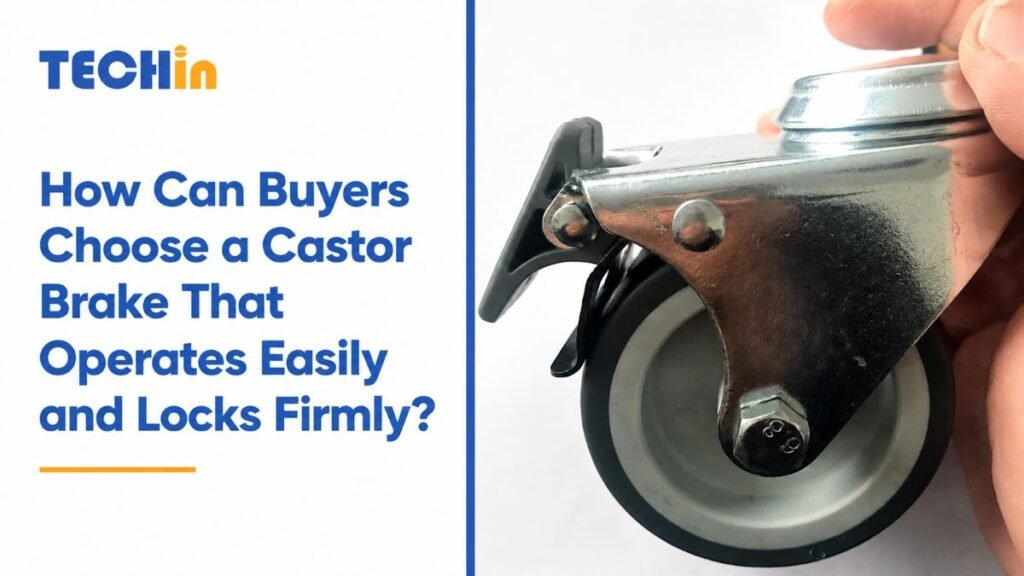
Choose a brake by specifying two separate results: easy pedal operation and firm locking of the wheel and swivel head. Test the complete castor in the intended configuration, load and positions.
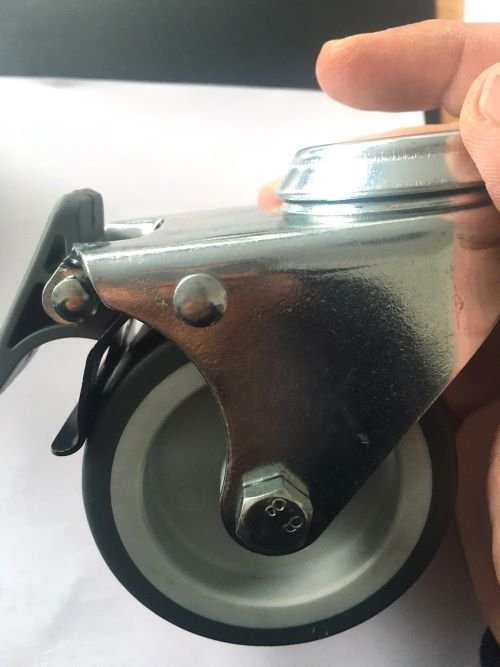
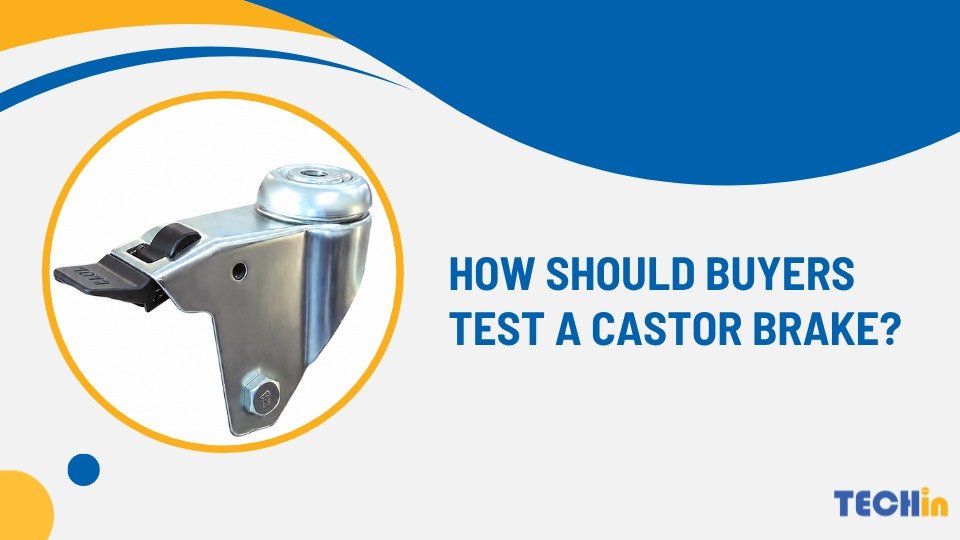
The brake pedal and swivel assembly should be assessed together when approving a braked castor.
A customer contacted Techin Castor after a 75 mm TPR twin-wheel castor had a brake pedal that was difficult to press. With the brake pressed, the swivel head could still turn. The customer described the brake spring tongues as not engaging reliably with the teeth of the lower ball race. We reviewed the requirement, and a later sample was easier to press. It also limited wheel movement under braking. The lesson is to specify operation and locking as separate acceptance points.
What should a castor brake lock?
A wheel brake stops wheel rotation. A wheel-and-swivel-head brake also stops the swivel head from turning. These functions should not be treated as the same result. BS EN 12527 is a test-method standard for castors and wheels that includes braking and locking devices; the applicable product requirements still need to define the acceptance criteria.[1]
For a trolley, workbench or other mobile unit that must stay in position, the buyer should state whether the requirement is wheel braking only or total locking. Manufacturer technical guidance describes a total-stop arrangement as braking the wheel and locking the swivel head together.[2]
The specification should name:
- wheel movement allowed after brake activation;
- swivel-head movement allowed after brake activation;
- the mounting and wheel configuration;
- the load and surface used for the check;
- the operator action and test position.
How should buyers define easy brake operation?
“Easy to operate” is useful only when the buyer explains how it will be judged. A supplier and buyer can agree a maximum pedal force, pedal travel or a repeatable hand or foot method. The chosen measure should represent how the end user will operate the castor.
Do not use pedal feel as the only acceptance test. A low operating force may come with insufficient contact at the wheel, weak spring engagement or incomplete swivel locking. Compare the complete assembly, including the specified wheel, brake spring, housing and swivel race.
A practical requirement checklist can use three separate lines:
- Pedal operation: Can the operator activate and release the brake without excessive effort? Record the agreed force, travel or repeatable method.
- Wheel holding: Does the braked wheel remain within the agreed movement limit? Record the result under the defined load and on the defined surface.
- Swivel locking: Does the swivel head remain locked after activation? Record the result from several starting positions.
How can buyers test the complete castor?
Test the finished castor, not only a loose pedal or spring. First confirm the correct wheel, housing, brake type and mounting arrangement. Then operate the brake and check wheel movement and swivel-head movement separately.
Use a repeatable sequence:
- Check the unbraked castor for smooth wheel rolling and free swivelling.
- Apply the brake using the agreed pedal position and method.
- Check whether the wheel turns.
- Check whether the swivel head turns.
- Repeat the operation from more than one swivel position.
- If the application is loaded, repeat under the specified load.
- Record any spring, race, pedal, housing or wheel damage.
A brake that passes a loose mechanism check may behave differently after the wheel is fitted or the housing is loaded. This is why the test configuration belongs in the purchase requirement.
Blickle’s technical guidance also notes that brake selection should consider user-friendliness and installation conditions.
What should the supplier record?
Ask for a short report that another inspector can repeat. It should identify the castor configuration and the decision rule, rather than simply state “brake checked”.
The report should include:
- product description and drawing revision;
- wheel material, size and bearing type;
- brake arrangement and pedal position;
- mounting method, load and test surface;
- operating method and number of repetitions;
- wheel movement result;
- swivel head movement result;
- visible damage or abnormal spring/race contact;
- the agreed acceptance decision.
For a customised castor, keep the approved requirement with the sample reference. If the brake spring, lower race, wheel, housing or tooling changes, review whether the sample needs to be checked again. Do not assume that a previous sample result covers a changed configuration.
Conclusion
Choose a castor brake by checking pedal operation, wheel holding and swivel locking separately. Write the conditions down and test the complete assembly before approval.