Skip to content
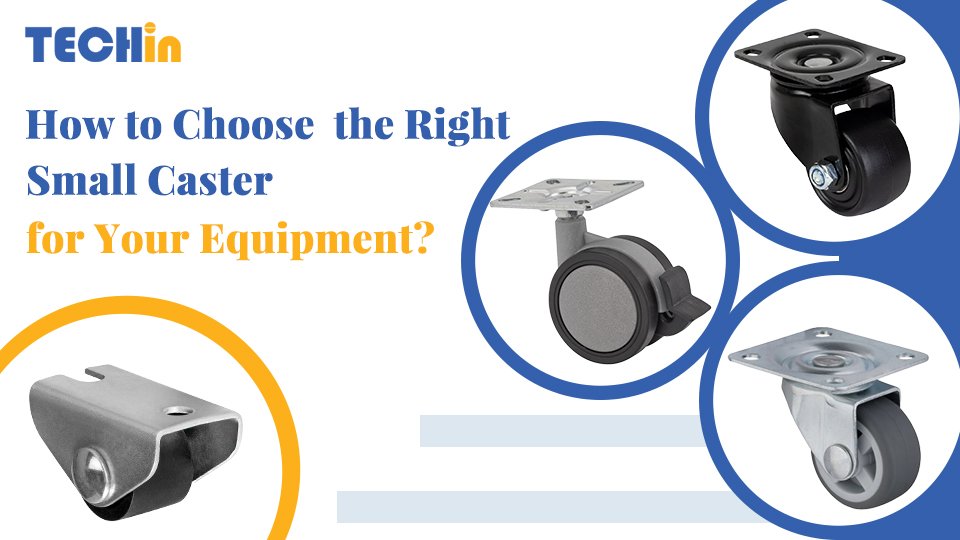
Struggling to move that heavy piece of furniture without scratching your floors? Adding mobility shouldn’t be a hassle. The right small caster wheels can make your equipment effortlessly portable and protect your surfaces.
Small caster wheels are rolling mechanisms, typically with a wheel diameter between 25mm to 64mm, attached to the bottom of furniture, appliances, or light-duty equipment to make them easier to move. They are ideal for applications where easy maneuverability in tight spaces is needed.
Let’s dive into the world of small caster wheels and find the perfect fit for your needs, whether you’re a purchasing manager for a large hardware chain or a distributor looking for quality products.
What are Small Caster Wheels?
Finding a way to move equipment easily without causing damage can be tough. Small caster wheels are the simple solution to this common problem, adding mobility to otherwise stationary items and making your life easier.
Small caster wheels are compact rolling devices attached to the bottom of objects to allow for easy movement. Typically, these casters feature wheel diameters ranging from 1 to 2.5 inches (approximately 25mm to 64mm). They are designed for light-duty applications and offer a practical way to make furniture, office chairs, and small carts mobile.
What are the advantages of Small Caster Wheels?
Struggling with rearranging your space or moving heavy items? Small caster wheels offer a simple and effective solution, providing mobility and convenience without the need for heavy lifting, making your daily tasks much easier.
The primary advantage of small caster wheels is the enhanced mobility they provide. They allow heavy items like office furniture and storage units to be moved with minimal effort. This makes reconfiguring a room or transporting goods a much simpler and more efficient process.
From my perspective as a supplier, the benefits of small caster wheels are clear, and they are a major selling point for my B2B clients. One of the biggest advantages is their ability to maneuver in tight spaces. Their compact size provides excellent flexibility, which is a huge plus compared to larger, more cumbersome casters. Another key benefit is floor protection. Many of our small casters are made from materials like soft rubber or thermoplastic rubber (TPR), which prevent scratches and scuffs on sensitive flooring. This is a crucial feature for our clients in the furniture and hospitality industries. Furthermore, small casters are cost-effective. They provide excellent performance for light-duty applications at a lower price point, all while maintaining durability and efficiency. Their simple design also means lower maintenance costs over the long run. I’ve found that the combination of mobility, floor protection, and affordability makes small caster wheels an incredibly valuable component for a wide range of products.
What are the uses of Small Caster Wheels?
Wondering how to make your furniture and equipment more mobile? Small caster wheels are the answer, offering a versatile solution for a wide range of applications, from homes and offices to industrial settings, making everything easier to move.
Small caster wheels are incredibly versatile and are used in a variety of settings. They are commonly found on furniture like office chairs, tables, and cabinets, making it easy to rearrange spaces without heavy lifting. In commercial environments, they are essential for hotel service carts and light-duty trolleys.
In my business, we see a wide array of applications for small caster wheels. One of the largest markets is for office furniture. Think about how often you move your office chair in a day; those small casters are what make it possible. We also supply a significant number of small casters to manufacturers of medical equipment. Medical carts and instrument stands need to be moved quickly and quietly, and small casters are perfect for this. Another common use is in retail and logistics, where they are attached to carts and dollies for transporting goods within stores and warehouses. I’ve also seen a rise in their use in DIY projects. Many of my clients who are hardware supermarket buyers tell me that small casters are a popular item for customers who want to add mobility to their own custom-built furniture or storage solutions. The ease of installation, with options like plate mounts and threaded stems, makes them very accessible for the average person.
What are the common materials of Small Caster Wheels?
Choosing the right material for your caster wheels can be confusing. The material you choose will impact performance and durability, so understanding the options is key to making the best choice for your specific needs and avoiding costly mistakes.
Common materials for small caster wheels include polypropylene (PP), nylon (PA), thermoplastic rubber (TPR), and polyurethane (PU). Each material offers different benefits in terms of durability, floor protection, and noise level, making them suitable for various applications and environments.
As a manufacturer, I work with these materials every day, and I can tell you that the choice of material is critical.
| Material | Key Properties | Common Uses |
|---|---|---|
| Polypropylene (PP) | Lightweight, abrasion-resistant, and cost-effective. | Office furniture, small carts, and other light-duty applications. |
| Nylon (PA) | Strong, durable, and resistant to chemicals and water. | A good alternative to metal casters on hard surfaces. |
| Thermoplastic Rubber (TPR) | Quiet, non-marking, and provides a cushioned ride. | Furniture, medical equipment, and environments where noise reduction is important. |
| Polyurethane (PU) | Durable, resistant to abrasion and chemicals, and protects floors. | A versatile option for a wide range of applications, from industrial to commercial. |
For furniture in homes or hotels, TPR and PU are often the best choices because they are quiet and won’t damage floors. This is a major concern for many of our European customers. For more industrial or heavy-duty applications, nylon can be a great option due to its strength. PP is a good all-around choice for light-duty applications where cost is a primary factor.
How to Choose the Right Small Caster Wheels for your needs?
Feeling overwhelmed by the options when it comes to choosing caster wheels? Selecting the wrong ones can lead to damaged floors and inefficient movement. By considering a few key factors, you can easily find the perfect casters for your equipment.
To choose the right small caster wheels, you need to consider the load capacity, the type of flooring, and the desired mobility. It’s also important to think about the mounting method and whether you need features like brakes.
When I’m helping a client like Hans from Germany, who is very detail-oriented, I walk them through a series of questions to determine the best caster for their needs. Here are the key considerations:
Load Capacity
First, you need to know the total weight of the item you want to move. A good rule of thumb is to choose casters with a combined weight capacity that is at least 25% more than the total weight of your item. This provides a safety margin and ensures the casters will last.
Floor Surface
The type of flooring is a critical factor. For hard surfaces like wood or tile, you’ll want to use softer wheels made of materials like TPR or soft rubber to prevent scratching. For carpeted floors, harder wheels made of nylon or polypropylene are a better choice as they will roll more easily.
Mobility Needs
Think about how you need the equipment to move. If you need it to move in a straight line, a combination of two rigid and two swivel casters might be best. If you need to be able to move it in any direction, especially in tight spaces, then four swivel casters would be the better option.
Mounting Options
There are several ways to attach casters to your equipment. The most common are:
- Plate Mount: A flat plate with four screw holes that provides a very secure attachment.
- Threaded Stem: A stem with a threaded bolt that screws into the equipment.
- Grip Ring Stem: A stem with a friction ring that pushes into a hole.
The best mounting option will depend on the design of your equipment. For many of my clients who sell to the DIY market, casters with simple mounting options are very popular.
By carefully considering these factors, you can ensure you select the perfect small caster wheels for your needs, providing smooth and effortless mobility for your equipment.
Conclusion
In conclusion, choosing the right small caster wheels involves considering load capacity, floor type, and mobility needs. With the right choice, you can easily add convenience and functionality to your equipment.