Are you struggling with equipment that’s hard to move or unstable? The problem might be your casters, specifically their height. Choosing the wrong caster height can lead to inefficiency and safety hazards.
The ideal caster height depends on your specific needs. A higher caster isn’t always better. While taller casters can navigate obstacles more easily, lower casters offer greater stability. The key is to find the right balance for your equipment and work environment.
Getting the caster height right is crucial for smooth and safe operation. It affects everything from how easily your equipment moves to how stable it is. Let’s dive deeper into what caster height is and why it’s so important to get it right.
What is Caster Height?
Having trouble with equipment that just doesn’t seem to move right? The issue might be a simple measurement you overlooked: the caster height. It’s a small detail with a big impact on performance.
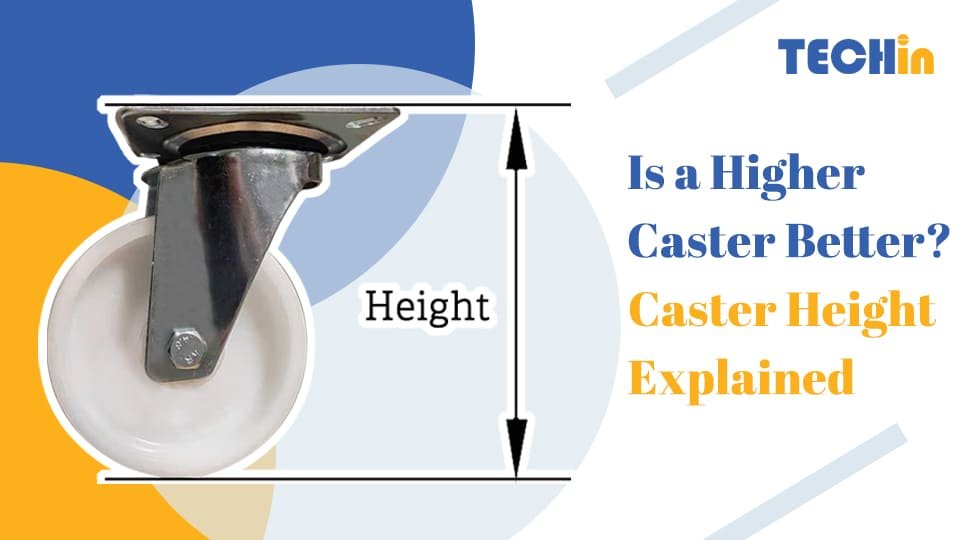
Caster height, or overall height, is the vertical distance from the top of the caster’s mounting point to the bottom of the wheel. This measurement determines the clearance between your equipment and the floor, directly affecting its mobility and stability. [1]
I remember a time when a customer, was having issues with a new line of carts. They were tipping easily, and his team was frustrated. After some investigation, we realized the casters he had chosen were too high for the cart’s design, raising the center of gravity and causing instability. This experience taught me just how critical it is to understand every aspect of a caster, starting with its height.
The “overall height” is a key specification for any caster. It dictates how high your equipment will sit off the ground. For plate casters, this is the distance from the top of the mounting plate to the bottom of the wheel. For stem casters, you measure from where the caster sits flush against the equipment to the bottom of the wheel, not including the stem itself. This height is not a fixed value; it changes based on the caster series, model, and especially the wheel diameter. Generally, a larger wheel diameter results in a greater overall height. This is a fundamental principle to keep in mind when selecting casters for any application.
What are the common sizes of Caster Height?
Feeling overwhelmed by the variety of caster sizes available? It’s a common challenge, but understanding the typical height ranges for different duty levels can simplify your selection process significantly.
Caster heights vary widely based on their intended use, from low-profile furniture casters under 80mm to heavy-duty industrial casters exceeding 200mm. The height is generally categorized by light, medium, and heavy-duty applications, with wheel diameter being a primary determining factor.
In my 20 years in the caster industry, I’ve seen it all. From small, discreet casters for high-end office furniture to massive, rugged casters for aerospace applications. The key is to match the caster’s capabilities, including its height, to the demands of the job. A small caster on a heavy industrial cart will fail, and an oversized caster on a small display rack is inefficient and costly.
Let’s break down the common height ranges for different caster types:
Light Duty Casters
These are typically used for furniture, office chairs, small carts, and medical equipment. They are designed for lighter loads, generally up to about 160 kg (350 lbs) per caster.
- 2-inch (50mm) casters: The overall height is usually in the 60-80mm range.
- 3-inch (75mm) casters: These typically have an installation height between 80-100mm.
Medium Duty Casters
Suitable for a wider range of applications like warehouse carts, tool chests, and various industrial equipment. These casters can handle loads from approximately 160 kg to 900 kg (350 – 2000 lbs) per caster.
- 4-inch (100mm) casters: The height for these is generally around 120-150mm.
- 5-inch (125mm) casters: Expect an installation height between 140-170mm.
Heavy Duty Casters
Designed for the toughest jobs, such as moving heavy machinery, large transport dollies, and in demanding industrial environments. These casters can support loads well over 900 kg (2000 lbs).
- 6-inch (150mm) casters: The overall height is typically in the 160-200mm range.
- 8-inch (200mm) and larger casters: The installation height for these starts at 200mm and can go much higher depending on the specific design and application.
It’s important to remember that these are general guidelines. The final installation height can be influenced by the bracket design, the type of wheel, and the mounting method (plate vs. stem). Always check the manufacturer’s specifications.
Is a Higher Caster Better?
Are you thinking that a bigger, taller caster is always the superior choice? It’s a common assumption, but in the world of casters, “bigger” doesn’t always mean “better.” It’s about finding the right fit for the job.
No, a higher caster is not inherently better. Taller casters offer the advantage of rolling more easily over obstacles and rough surfaces. However, they also raise the equipment’s center of gravity, which can decrease stability and make it more difficult to maneuver in tight spaces.
Let’s weigh the pros and cons to see why the ideal choice is not always the tallest one.
The Trade-Offs of Caster Height
| Advantages of Higher Casters | Disadvantages of Higher Casters |
|---|---|
| Improved Rollability: Larger diameter wheels, which result in a higher overall height, roll over obstacles like cracks, thresholds, and debris more easily. This reduces the push force required from the user. [14] | Reduced Stability: A higher caster raises the center of gravity of the cart or equipment, making it more susceptible to tipping, especially when carrying heavy or unbalanced loads. |
| Better for Rough Surfaces: For outdoor use or on uneven floors, a taller caster provides a smoother ride and is less likely to get bogged down. | Maneuverability Issues: While they roll in a straight line easily, taller casters can make equipment harder to turn and maneuver, particularly in confined spaces. |
| Increased Clearance: A higher profile provides more space between the equipment and the floor, preventing the bottom of the cart from scraping or getting caught on inclines. | Increased Overall Height of Equipment: This can be a problem if the equipment needs to fit under tables, counters, or through low doorways. |
| Higher Load Capacity (Generally): Often, a larger wheel diameter is associated with a higher load capacity, although this is not a universal rule. | Higher Cost: Typically, larger and taller casters are more expensive than their smaller, lower-profile counterparts. |
The decision to go with a higher caster should be a conscious one, based on a clear need for clearance and the ability to navigate rough terrain, while carefully considering the potential impact on stability and maneuverability.
How to Choose the Caster with the Right Height for Your Needs?
Ready to select a caster but unsure how to pinpoint the perfect height? It’s a critical decision that balances load, floor conditions, and maneuverability. Making the right choice ensures safety and efficiency.
To choose the right caster height, first determine your required load capacity and assess your floor conditions. Then, consider clearance needs and stability requirements. Finally, select a wheel diameter that balances ease of rolling with the necessary overall height for your specific application.
When I’m helping a client, I walk them through a step-by-step process. We don’t just look at a catalog and pick a size. We talk about the heaviest loads they’ll carry, the types of floors the casters will roll on, and any tight spaces they need to navigate. This ensures they get a caster that performs perfectly and lasts.
Here’s a structured approach to help you select the ideal caster height:
A Step-by-Step Guide to Selecting Caster Height
- Calculate Your Load Capacity:
- Start by determining the maximum weight your equipment will carry.
- Divide this total weight by the number of casters you’ll be using (usually 3, to be safe, in case one caster lifts off the ground on an uneven surface). This gives you the minimum load capacity required per caster.
- Load capacity often correlates with wheel size and, therefore, height. Heavier loads generally require larger, taller casters.
- Analyze Your Floor and Environment:
- Smooth Surfaces: For smooth, clean floors like in a warehouse or office, smaller, lower-profile casters are often sufficient and provide better stability.
- Rough or Uneven Surfaces: If you’ll be rolling over cracks, debris, thresholds, or outdoor terrain, you need a larger wheel diameter and a higher caster to navigate these obstacles easily.
- Determine Clearance and Overall Height Constraints:
- Measure the maximum allowable height for your equipment. Does it need to fit under a counter, workbench, or through a specific doorway?This will set an upper limit on your caster’s overall height.
- Consider if you need a certain amount of clearance underneath the equipment to avoid dragging or for other operational reasons.
- Balance Stability and Rollability:
- This is the core trade-off. Remember, a higher caster (larger wheel) rolls more easily but is less stable. A lower caster is more stable but may struggle with obstacles.
- For tall or top-heavy equipment, prioritize stability and choose the lowest caster height that still meets your clearance and rollability needs.
- Consult an Expert:
- When in doubt, don’t hesitate to talk to a supplier. With 20 years of experience, we can provide valuable insights and recommend the best solution based on your specific needs, ensuring you get a product that is both safe and efficient.
By carefully considering these factors, you can move beyond simply guessing and make an informed decision that enhances the performance and safety of your equipment.
Conclusion
Choosing the right caster height is a critical decision that directly impacts your equipment’s performance and safety. It’s not about finding the highest option, but the most suitable one for your needs.