Struggling with wheels that crack under pressure or damage your floors? Choosing the wrong castor can halt your entire operation. You need strength, but also reliability and floor protection.
The strongest type of castor wheel for the absolute heaviest loads is typically forged steel or cast iron. These materials offer the highest load-bearing capacity, making them ideal for extreme industrial environments where sheer strength is the primary concern and floor protection is not an issue.
As a manufacturer in the castor industry for over 20 years, I’ve seen countless situations where the “strongest” wheel wasn’t the right wheel. A purchasing manager from Germany, Hans, once told me, “We need strength that doesn’t destroy our factory floor.” His problem wasn’t just about lifting heavy things; it was about doing it efficiently and safely. This guide will help you understand what truly makes a castor strong and how to pick the perfect one for your needs, just like I helped Hans.
What Factors Determine the Strength of Castor Wheels?
Are you worried that your casters might fail at a critical moment? The problem is that “strength” isn’t just one number. It’s a combination of factors that must match your specific industrial application.
The strength of a castor wheel, or its load capacity, is determined by the wheel material, diameter, tread width, and the type of bearings used. Each element plays a crucial role in how much weight a caster can safely support, both when stationary and in motion.
When my Italian client, Lenu, looks for casters, she needs to balance budget with quality. She can’t afford a failure. I always explain that we need to look beyond just the maximum load. We have to consider the whole picture. The environment, the floor type, and how the casters will be used all play a part in choosing a wheel that is strong enough for the job. Forged steel might have the highest capacity, but if it damages a client’s floor, it’s the wrong choice. Understanding the details is key to finding a castor that is both strong and cost-effective.
Deeper Dive: The Core Components of Strength
A castor’s load capacity is not just a single feature but the result of several design choices working together. Let’s break down the most important ones.
- Wheel Material: This is the foundation of strength. Harder materials like forged steel and cast iron can support immense weight. Softer materials like polyurethane and rubber offer other benefits, such as floor protection and noise reduction, but generally have lower load capacities. Nylon offers a good balance, being strong yet lightweight.
- Wheel Diameter: A simple rule to remember is that a larger wheel can generally support a heavier load. A larger diameter helps to distribute the weight over a wider area, reducing stress on both the wheel and the floor. It also rolls more easily over obstacles and cracks.
- Tread Width: Just like with diameter, a wider wheel can handle more weight. A wider tread provides a larger surface area to distribute the load, which increases its capacity and stability.
- Bearings: The type and quality of the bearings are critical. Precision ball bearings, for example, reduce friction and allow for easier rolling under heavy loads, which contributes to the overall dynamic strength and longevity of the caster.
Understanding how these factors interact is essential. A large-diameter cast iron wheel will have a very high load rating, but a smaller polyurethane wheel might be “stronger” for an application that requires constant movement on a delicate floor, as it will resist wear and tear without causing damage.
| Factor | Impact on Strength | Best For |
|---|---|---|
| Material | Determines the maximum load capacity and durability. | Forged Steel/Cast Iron for highest loads; Polyurethane for floor protection. |
| Diameter | Larger diameters generally support heavier loads. | Heavy equipment and uneven surfaces. |
| Tread Width | Wider treads distribute weight better, increasing capacity. | Maximizing stability and load capacity. |
| Bearings | High-quality bearings reduce friction and support dynamic loads. | Applications with frequent movement and heavy loads. |
What Are the Four Types of Strong Castor Wheels?
Feeling overwhelmed by the sheer number of caster options available? The problem is that each material seems strong, but they all behave differently in a real-world factory setting. You need a clear breakdown.
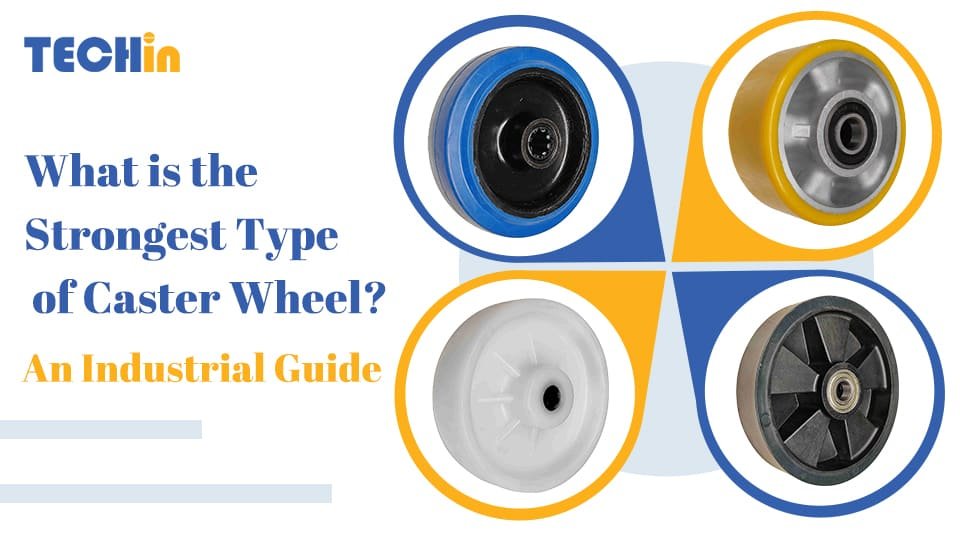
Four of the strongest and most common types of industrial castor wheels are cast iron, nylon, polyurethane (PU), and rubber. Each material offers a unique combination of load capacity, durability, and operational benefits suited for different heavy-duty applications.
I remember working with a hardware supermarket buyer who needed a one-stop solution for their entire range. They needed wheels for everything from warehouse trolleys to display units. They were confused about whether to choose rubber or polyurethane. By breaking down the main types, I helped them see that having a selection of these four core materials would cover nearly all of their customers’ needs, from the heaviest industrial jobs to more delicate commercial use. It’s about having the right tool for the right job.
Deeper Dive: A Closer Look at the Top 4 Materials
Choosing the right material is a critical decision that impacts performance, safety, and cost. Each of these four materials has proven its strength in industrial settings, but they do so in different ways.
- Cast Iron Wheels: These are a traditional choice for heavy-duty applications. Cast iron is incredibly strong and durable, capable of handling very heavy loads. It is also resistant to high temperatures, making it suitable for environments like foundries. However, cast iron wheels can be noisy and may damage floors, so they are best used on reinforced concrete or steel surfaces.
- Nylon Wheels: Nylon is a strong, lightweight, and economical material. It offers good load capacity and is highly resistant to chemicals, oils, and moisture. This makes nylon wheels a great choice for food processing or chemical industries. While they roll easily on smooth surfaces, they can be noisy and are not ideal for rough floors or for protecting sensitive floor surfaces.
- Polyurethane (PU) Wheels: Polyurethane is a very versatile material that combines the hardness of plastic with the elasticity of rubber. This gives PU wheels a high load-bearing capacity while also being quiet, non-marking, and protective of floors. They are resistant to abrasion, oils, and chemicals, making them a fantastic all-around choice for many industrial settings, from warehouses to manufacturing plants.
- Rubber Wheels: While generally having a lower load capacity than the other three, heavy-duty rubber wheels are strong in a different way. Their strength lies in their ability to absorb shock and vibration, providing a cushioned ride that protects both the cargo and the floor. They also offer excellent grip, especially on wet or uneven surfaces, and are very quiet in operation.
Which Type of Castor Wheel is the Strongest?
You need the absolute maximum strength, but what does that really mean? The issue is that the “strongest” wheel in one situation could be the weakest in another if it fails due to environmental factors.
For pure load-bearing capacity, forged steel and cast iron wheels are the strongest, capable of supporting the heaviest industrial loads. However, polyurethane wheels often provide the best combination of strength, durability, and floor protection for a wider range of applications.
Hans, my German client, needed casters for his material handling equipment. His priority was reliability under extreme weight. We started by looking at cast iron. They could handle the load, no question. But his equipment was moved frequently across a large, clean factory floor. The noise and potential for floor damage from cast iron were significant drawbacks. We ultimately chose a high-capacity polyurethane wheel bonded to a cast iron core. This gave him the strength he needed without compromising the quality of his work environment. The “strongest” solution was the one that solved all his problems.
Deeper Dive: Strength in Context
Defining the “strongest” wheel depends entirely on the application’s demands. While cast iron boasts incredible compressive strength, it might not be the best choice when other factors are considered. Let’s compare them based on different strength-related criteria.
- Ultimate Load Capacity: If the only goal is to support a massive, static load, cast iron or forged steel is the winner. They have minimal compression and can withstand thousands of pounds of weight without deforming. They are ideal for heavy machinery stands or industrial carts that carry extreme loads.
- Dynamic Strength & Durability: For applications involving frequent movement, shock, and potential debris, polyurethane wheels often prove stronger in the long run. PU is highly resistant to abrasion, cutting, and tearing. It can roll over small obstacles without damage, whereas a brittle material like cast iron might crack under a sudden impact.
- Environmental Strength: In wet or chemical-heavy environments, nylon or stainless steel casters can be considered the “strongest” because they resist corrosion and degradation that would weaken other materials over time.
- Floor Protection: A wheel that destroys the floor can cause costly downtime and repairs. In this context, polyurethane and rubber wheels are the strongest choice because they protect your flooring investment while still moving heavy loads effectively.
Here is a simple comparison:
| Wheel Type | Max Load Capacity | Floor Protection | Shock Absorption |
|---|---|---|---|
| Cast Iron | Very High | Poor | Poor |
| Nylon | High | Fair | Poor |
| Polyurethane | High | Excellent | Good |
| Rubber | Medium | Excellent | Excellent |
Ultimately, the strongest wheel is the one that performs reliably and safely under all the conditions of your specific workplace.
How to Keep the Strength of Castor Wheels?
You’ve invested in high-quality, strong casters. But are you worried they will wear out too quickly? The problem is that even the strongest wheels can fail if they are not properly maintained.
To maintain the strength and longevity of your castor wheels, you should perform regular cleaning, inspection, and lubrication. Also, ensure you are always operating within the caster’s specified load capacity and tightening any loose hardware.
I always tell my clients, like Lenu and Hans, that buying a good caster is only the first step. Proper maintenance is what guarantees its performance over the years. A simple monthly check can prevent a small issue, like built-up debris or a loose bolt, from turning into a major failure. This not only saves money on replacements but also prevents dangerous accidents and costly downtime in their operations. A well-maintained caster is a strong caster.
Deeper Dive: A Practical Maintenance Checklist
Preserving the strength of your casters is an active process. Neglect is the number one enemy of longevity. By following a simple, routine maintenance schedule, you can significantly extend the life of your wheels and ensure they continue to perform at their maximum capacity.
- Regular Cleaning: Dirt, dust, and other debris can build up on wheels and in the swivel riggings. This accumulation can increase friction, hinder movement, and cause premature wear. Use a cloth, brush, or compressed air to regularly clean your casters, paying special attention to the area around the axle and bearings.
- Frequent Inspection: Make it a habit to visually inspect your casters. Look for signs of wear and tear, such as cracks, flat spots on the wheel, or bent forks. Check that the wheel spins freely and that the swivel action is smooth. Catching these small issues early can prevent a catastrophic failure down the line.
- Proper Lubrication: Friction is a major cause of wear. The moving parts of a caster, including the wheel bearings and the swivel raceway, require lubrication to operate smoothly. Apply an appropriate grease or lubricant according to the manufacturer’s recommendations. This should be done every few months, or more often in high-use or harsh environments.
- Check Hardware: The vibrations from regular use can cause nuts and bolts to loosen over time. Regularly check and tighten all mounting hardware to ensure the caster is securely attached to the equipment. A loose caster can create instability and pose a serious safety risk.
- Avoid Overloading: Every caster has a specified maximum load capacity. Consistently exceeding this limit will cause the materials to fatigue and fail. Always be aware of the weight you are putting on your equipment and ensure it does not exceed what the casters are designed to handle.
Conclusion
Choosing the strongest caster means looking beyond just load capacity. It involves matching the right material and design to your specific industrial needs to ensure long-term reliability, safety, and efficiency.