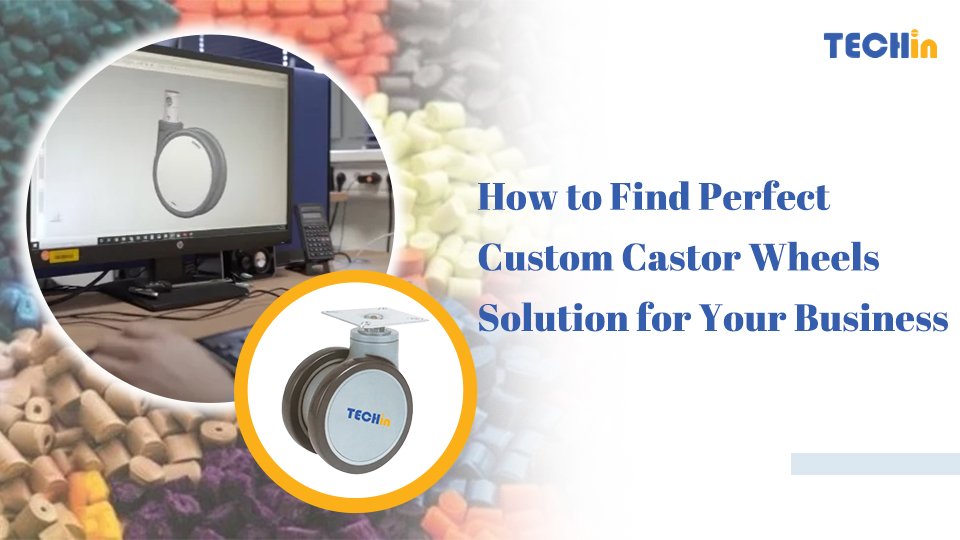
You’re nearing the finish line on a new product, but there’s one last part to source: the castor wheels. It seems simple, but now you’re stuck. The deadline is looming, and none of the standard options are quite right. What do you do?
Finding the perfect custom castor wheel solution involves two key steps: precisely defining your specific needs early in the design process and partnering with a specialized manufacturer. By treating castors as a critical component, you can collaborate with an expert to develop a tailored solution that ensures your final product’s performance, safety, and success.
Many businesses underestimate the importance of castors, treating them as simple components to be sourced at the last minute. This common oversight often leads to the discovery that no off-the-shelf part meets their unique requirements, causing project delays and budget overruns.
What is a Custom Castor Wheels Solution?
Feeling stuck with standard parts that don’t meet your unique demands? A generic castor might not handle your specific load, environment, or aesthetic needs. This mismatch can compromise your product’s performance and even its safety.
A custom castor wheel solution is an assembly engineered to your exact specifications. This can range from modifying a standard design with a different stem or color to a fully bespoke wheel created for a unique application, ensuring a perfect fit for your product’s function and branding.
When people hear “custom solution,” they often think of building something entirely from scratch. This can sound intimidating, expensive, and time-consuming. However, customization is often much simpler and more accessible. A true custom solution means finding the most efficient way to meet your specific requirements. For instance, I remember a client who needed a batch of silent castors for medical equipment on a very tight schedule. The standard silent models available didn’t fit their design, and a full custom production would take too long.
Instead of starting from zero, we took a creative approach. We selected a standard bracket that met their dimensional needs and focused on customizing only the wheel’s tread. By replacing the standard material with a special artificial rubber, we achieved the required silent operation. This partial customization solved their problem perfectly. It met their performance needs while keeping the cost and lead time well within their budget. This is the essence of a smart custom solution: targeted modifications that deliver maximum impact with minimal complexity.
| Customization Area | Potential Modifications | Benefit |
|---|---|---|
| Wheel Material | Polyurethane, Rubber, Nylon, Steel, Special Polymers. | Match floor type, reduce noise, resist chemicals/heat. |
| Size & Dimensions | Diameter, Width, Overall Height. | Fit installation space, improve mobility over obstacles. |
| Bearings | Roller, Ball, or Sleeve Bearings. | Reduce rolling effort and improve ergonomics. |
| Bracket & Mounting | Swivel or Rigid, Top Plate, Threaded Stem, Grip Ring. | Ensure secure attachment and proper movement (linear vs. multi-directional). |
| Special Features | Brakes, Swivel Locks, Toe Guards, Custom Colors, Logos. | Enhance safety, branding, and specific functionality. |
Why do you need a Custom Castor Wheels Solution?
Have you ever used a standard part that just wasn’t quite right? It causes constant, low-level frustration and inefficiency. An off-the-shelf castor might be too noisy, mark up your floors, or fail under the specific stresses of your workplace, disrupting operations.
A custom castor wheel solution is necessary when standard products fail to meet your specific operational demands. It solves unique challenges related to load capacity, environmental conditions, floor protection, or ergonomic requirements, ensuring optimal performance, safety, and durability for your equipment.
The need for a custom solution often arises from very specific pain points. Perhaps your business operates in an environment with extreme temperatures that cause standard wheels to crack or melt. Or maybe you handle sensitive electronics and need castors that prevent static discharge. In a food processing or medical setting, you would require wheels made of materials that are easy to sterilize and resistant to harsh cleaning chemicals. Standard castors are designed for general use and simply cannot account for these specialized conditions.
Relying on a “good enough” solution can be costly in the long run. An ill-suited castor can lead to damaged floors, broken equipment, or even workplace injuries. I’ve seen companies struggle with carts that are difficult to push, leading to employee strain and reduced productivity. These are not just minor inconveniences; they are operational inefficiencies that impact your bottom line. By investing in a custom solution, you are not just buying a component; you are investing in smoother operations, enhanced safety, and the longevity of your equipment. It’s about moving from a reactive approach of replacing failed parts to a proactive strategy of building for reliability from the ground up.
How to Find a manufacturer that could provide a Custom Castor Wheels Solution?
You need a custom solution, but where do you turn? Large corporations might not be interested in your small batch, quoting long lead times and high prices. A small local shop may lack the engineering expertise or supply chain to deliver what you need.
The ideal partner is a specialized manufacturer with deep industry experience. Look for a company that has a strong understanding of your market and the supply chain, offering flexible services that go beyond full customization to include cost-effective partial modifications.
Finding the right supplier is a balancing act. Many large manufacturers are set up for high-volume production of standard parts. When approached with a request for a small, custom batch, they are often unwilling or unable to help efficiently. Their processes are not flexible, leading to long, frustrating delays and costs that can break a project budget. On the other hand, you might find a small trading company or a local hardware store that is eager for your business. However, they often lack the in-house technical capabilities to truly understand and execute a custom design. They may act as middlemen, adding another layer of complexity and potential for miscommunication.
This is where a dedicated, experienced manufacturer like Techin comes in. With over 20 years in the castor industry, we’ve built our business to fill this gap. We have our own wheel casting production line and wire cutting machine, giving us direct control over the manufacturing process. Our deep experience in the European market means we understand the quality standards and logistical challenges. We are not just an order-taker; we are a solutions provider. Whether you need a fully custom wheel, a specific color match, your logo molded into the part, or a smart, cost-effective modification like changing the tread material, we have the expertise and the infrastructure to deliver. We provide a one-stop service, leveraging a well-developed supply chain to ensure every component meets European standards, complete with the necessary test reports.
How to Get Custom Castor Wheels Tailored to Your Needs?
You’re ready to talk to a supplier, but you’re worried you won’t be able to explain your needs correctly. The technical details feel overwhelming, and you fear a misstep could lead to ordering the wrong product, wasting time and money.
The key is to follow a structured process. By systematically defining your requirements, from the basic dimensions and load to the specific environmental and functional needs, you can communicate your specifications clearly and confidently, ensuring you get the perfect solution.
To find the perfect product for your needs, you must first clearly define them. This process doesn’t have to be complicated. By breaking it down into a series of logical steps, you can build a complete picture of your ideal castor. This structured approach makes it easy to communicate with us, ensuring we can provide the best possible custom solution.
Step 1: Define the Basics: Diameter, Height, and Load Capacity
This is the foundation of your choice. You need to consider:
- Load Capacity: How much weight does each individual castor need to support? Always calculate with a safety margin; a good rule of thumb is to divide the total weight of your equipment by three (even if it has four wheels) to account for uneven floors.
- Installation Height: How much vertical space is available for the castor?
- Wheel Diameter: A larger diameter wheel generally rolls more easily over obstacles and cracks.
Step 2: Assess the Operating Scene and Environment
Where and how will the castors be used? This is critical.
- Floor Condition: Will it be used on a smooth factory floor, rough concrete, or outdoors on uneven ground? Hard surfaces benefit from softer wheels like rubber or polyurethane for better traction and noise reduction.
- Environmental Factors: Will the castors be exposed to high or low temperatures, moisture, or chemicals? Special environments require materials with specific resistance, such as stainless steel for corrosion resistance.
Step 3: Select the Wheel Surface Material
The material directly impacts durability, noise, and floor protection.
- Key Considerations: Do you need high wear resistance, good shock absorption, or quiet operation?
- Hygiene Requirements: For food or medical industries, you must select materials that meet sanitary standards and are easy to clean, such as stainless steel or specially coated options.
Step 4: Choose the Wheel Bearings
The type of bearing (like roller or ball bearings) determines the rolling resistance. In wet or sanitary environments, you should opt for stainless steel bearings or those with a Teflon coating.
Step 5: Select the Bracket Type and Brake Function
How does your equipment need to move?
- Steering Function: Do you need “swivel” castors that can rotate 360 degrees for maximum flexibility, or “rigid/fixed” castors that only move in a straight line for stability?
- Bracket Material: Do you require rustproof materials like stainless steel?
- Brake Function: Is a brake needed to lock the equipment in place for safety or stability? If so, what type of brake is most effective?
Step 6: Determine the Installation Method
How will the castor attach to your equipment?
- Top Plate: The most common method; be sure to note the plate dimensions and screw hole spacing.
- Stem Mounting: Attached via a bolt or threaded stem through a hole in the top of the castor.
- Expansion Sleeve: Used for fixing castors inside round or square tubing.
Once you have worked through these steps, you will have a clear and detailed understanding of your requirements. This information will allow us to work with you to create the best custom castor solution efficiently.
Conclusion
Ultimately, choosing the right castors is a crucial early step, not a final detail. By clearly defining your needs and partnering with an experienced manufacturer, you can get a perfect custom solution.