Skip to content
Sourcing casters internationally feels complicated. You find a product that looks right, but the specs use different terms, the standards are confusing, and you worry it won’t meet your market’s legal requirements. It’s a frustrating process that can lead to costly purchasing mistakes and delays.
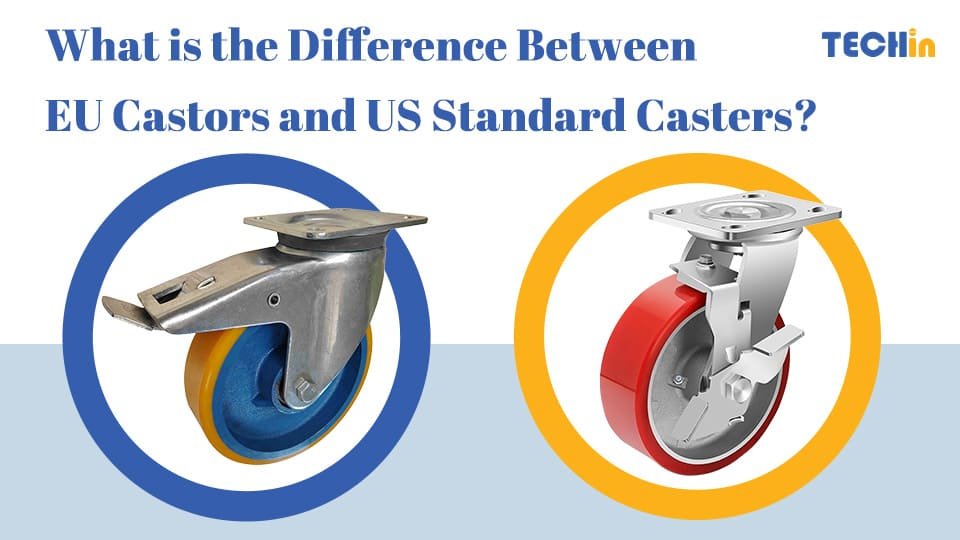
The core differences between European and American casters come down to design philosophy, measurement units, and regulatory standards. US casters are typically measured in inches and focus on robust, heavy duty applications, while EU castors use millimeters and often feature a more modern, streamlined design.
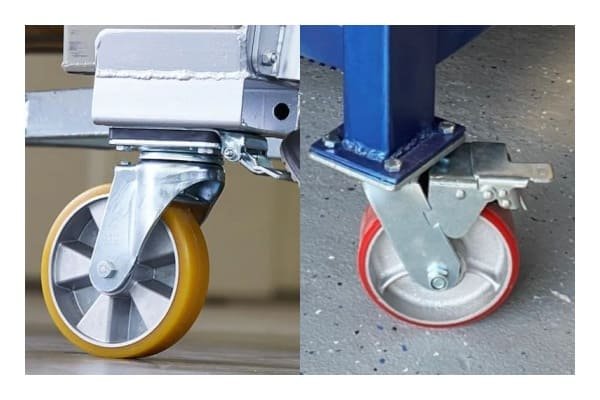
We’ve been in the caster manufacturing business for over 20 years, dealing with clients from all over the world, including detail-oriented buyers like Hans from Germany and budget-conscious entrepreneurs like Lenu from Italy. I’ve seen firsthand how a simple misunderstanding about regional differences can cause major headaches. It’s not just about the product; it’s about ensuring it fits perfectly into your supply chain and meets your customers’ expectations. Let’s break down these differences so you can source the right products with confidence.
Why Do Americans Say “Caster” While Europeans Say “Castor”?
Have you ever been confused by the spelling? You’re searching for a product, and different suppliers use different words. This simple difference can make you wonder if you’re even looking at the same component, creating uncertainty right from the start of your search.
The difference between “caster” and “castor” is purely linguistic and regional, not mechanical. “Caster” is the standard spelling in American English, while “castor” is the preferred term in British English and is commonly used across Europe. Both words refer to the exact same thing.
As a manufacturer supplying both markets, we use the terms interchangeably based on who we’re talking to. For an American client, I’ll talk about our new line of heavy duty “casters.” For a European distributor, it’s all about the quality of our “castors.” It’s a small detail, but it shows we understand their market. No matter the spelling, the function is identical: to make heavy objects mobile.
Why Do US and EU Casters Use Different Component Names?
Imagine trying to discuss technical specifications with a supplier, but you’re using different words for the same parts. This communication gap can lead to errors in product selection, ordering the wrong components, and wasting valuable time and money clarifying details that should be simple.
US and EU caster terminology differs due to independent industrial evolution. Key terms like “rig” (US) versus “housing” or “fork” (EU) for the main frame, or “top plate” (US) versus “fixing plate” (EU) for the mounting component, mean the same thing but developed separately.
This divergence in language is a direct result of the US and European manufacturing sectors developing their own standards and practices over the last century. There was no global body to standardize these terms initially, so each region adopted its own vocabulary.
Understanding these small but crucial differences is key to clear communication and ensuring you get the exact product you need.
How Do US and EU Casters Differ in Overall Appearance and Style?
Your equipment’s final look matters, but sourcing casters can feel like a functional-only decision. You might choose a caster that works perfectly but clashes with your product’s design aesthetic. This mismatch can cheapen the overall feel of your equipment, impacting customer perception and sales.
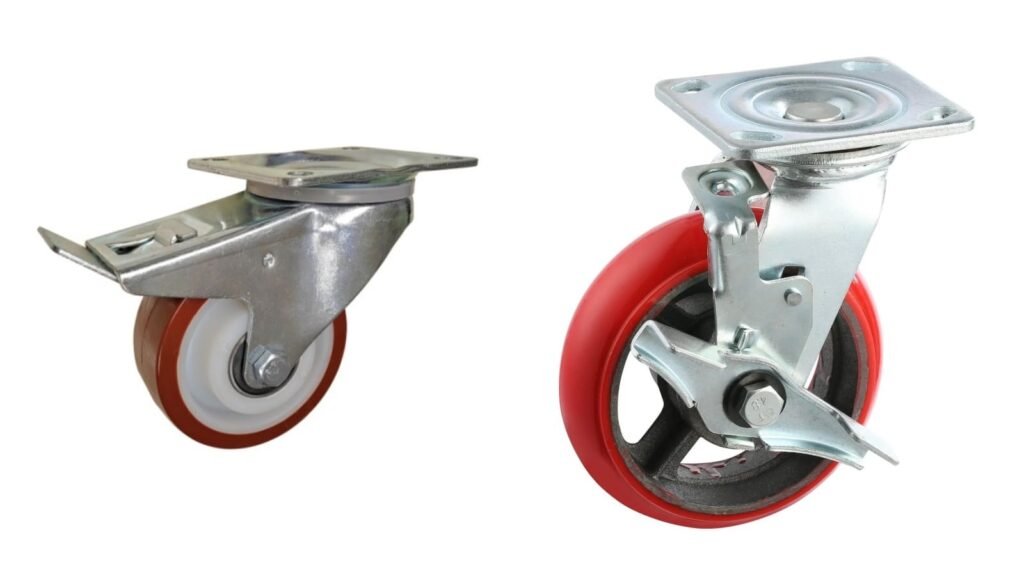
US and EU casters have distinct design philosophies. American casters often have a heavier, more rugged appearance, built to look and feel robust for industrial settings. European castors typically feature a cleaner, more modern, and aesthetic-focused design, even for industrial applications.
This difference comes from market expectations. In my experience, American buyers, especially in heavy industry, associate visual bulk with strength and durability. They want to see the toughness. I once had a client from Texas who rejected a perfectly capable EU standard caster because it “looked too flimsy” for his massive tool chests, even though the load ratings were identical. On the other hand, our German and Italian partners, like Hans and Lenu, often prioritize a sleek, integrated look. They want the castor to complement the design of the equipment, not just be a functional afterthought. European design often incorporates smoother lines, concealed axles, and more stylish brake pedals, making them popular for furniture, medical equipment, and apparatus where appearance is just as important as performance.
What Are the Key Engineering and Structural Design Differences Between US and EU Casters?
Choosing a caster based on looks or load capacity alone can be a mistake. You might find it doesn’t perform as expected because of subtle design differences. This can lead to issues with maneuverability, braking effectiveness, or long-term durability, forcing premature replacements.
The engineering differences between US and EU casters are significant, affecting performance and usability. These include bracket (yoke) shape, where US designs are often stamped for strength, while EU designs may be pressed and formed for a sleeker profile, and different philosophies in brake pedal design.
Let’s dive a bit deeper into the specifics. US caster yokes often use a single stamped piece of steel for the legs and top plate, a design that is very strong and cost-effective for mass production. European designs might use multiple pieces welded together or more complex forming techniques to achieve a specific look or to integrate features like thread guards more seamlessly. Another key difference is the brake. Many US industrial casters use a simple metal “tread lock” brake that presses directly onto the wheel tread. It’s effective but can be harsh. In Europe, you’ll see more “total lock” brakes that simultaneously lock both the wheel and the swivel mechanism with a single pedal press. These are often made of durable polymers and designed for easier, more ergonomic foot operation. I always advise clients to consider how the equipment will be used. For a simple, heavy-duty cart that just needs to be locked in place, a US standard tread lock is fine. But for a medical cart that needs to be perfectly stationary and easy to operate, the European total lock is superior.
How Do US and EU Caster Standards and Certifications Compare (ANSI/ICWM vs EN, REACH, RoHS, PAHs)?
Navigating international standards is a major pain point for buyers. You worry that a product compliant in one region won’t be legal to sell in another. This uncertainty can halt your procurement process or, worse, lead to importing non-compliant goods, resulting in fines and recalls.
US and EU caster standards differ fundamentally in their structure and enforcement. The primary US standard, ANSI/ICWM, is industry-developed and largely voluntary. In the EU, standards like the EN 12527 series are part of a mandatory, government-led regulatory framework often tied to CE marking.
I’ve spent countless hours ensuring our products meet these different requirements. In the US, the Institute of Caster and Wheel Manufacturers (ICWM) sets performance standards for things like load rating, durability, and safety. While not law, major buyers expect compliance. The EU system is much more complex. To sell many products in Europe, you need a CE mark, which declares conformity with EU safety, health, and environmental requirements. For castors, this means adhering to specific EN standards. Furthermore, EU regulations like REACH (Registration, Evaluation, Authorisation and Restriction of Chemicals) and RoHS (Restriction of Hazardous Substances) place strict limits on materials. For example, REACH restricts the use of Polycyclic Aromatic Hydrocarbons (PAHs) in rubber wheels, which are chemicals that can be harmful. We have to use different rubber formulations for our EU-bound wheels to meet these stringent PAH limits. This is a critical detail for clients like Hans in Germany, who cannot risk selling equipment with non-compliant components.
Comparison of Key Standards
| Standard/Regulation | Region | Type | What it Covers |
|---|---|---|---|
| ANSI/ICWM | US | Industry Standard (Voluntary) | Defines testing methods and performance for load rating, durability, and safety. |
| EN Standards | EU | Harmonized Standard (Mandatory for CE) | Specifies technical requirements for casters used in furniture, industrial, and medical applications. |
| CE Marking | EU | Regulatory Mark (Mandatory) | Indicates a product complies with EU health, safety, and environmental protection laws. |
| REACH | EU | Chemical Regulation (Mandatory) | Restricts harmful chemicals, including PAHs in rubber and plastic components. |
| RoHS | EU | Chemical Regulation (Mandatory) | Restricts specific hazardous substances like lead and cadmium in electrical and electronic components. |
| PAHs | EU | Chemical Regulation (Mandatory) | Limits the concentration of Polycyclic Aromatic Hydrocarbons in consumer products. |
How Do Manufacturers in China Adapt to These Differences?
Finding a single supplier who can meet both US and EU requirements is difficult. Many factories specialize in one standard, forcing you to manage multiple suppliers. This increases complexity, raises costs, and creates inconsistencies in your supply chain, making your job much harder.
Manufacturers in China adapt by specializing. Many factories produce either EU-style or US standard casters exclusively due to the significant differences in molds, tooling, and compliance knowledge. However, experienced suppliers like us maintain dual-standard production lines to serve global markets effectively.
The reality of manufacturing is that the tooling is completely different. The molds for a rugged, inch-based US standard caster cannot be used for a metric, aesthetically-focused EU-style castor. The capital investment to produce both is significant. That’s why many smaller factories choose to focus on one market. They become experts in either ANSI/ICWM or EN standards. I started my business focusing on the European market, so we built our expertise around EN standards, REACH, and RoHS compliance. When we expanded to the US, we had to invest in entirely new production lines, from wire cutting machines to casting molds, and train our team on the nuances of ANSI/ICWM testing protocols. This dual capability is one of our biggest strengths. It allows us to be a one-stop shop for global distributors. We can provide a German client like Hans with fully compliant EN-certified heavy-duty castors and an Italian client like Lenu with a range of furniture castors that meet all EU chemical regulations, all from the same facility.
Where in the World Are US Casters Used vs EU Castors Used?
Ordering the wrong regional style can lead to products that are incompatible or undesirable in your target market. You might ship a container of equipment to South America only to find your customers prefer the European design, hurting sales and forcing you to re-evaluate your product strategy.
The geographic usage of caster standards is quite distinct. US standard casters are dominant in the United States, Canada, and most of Latin America. EU standard castors are standard across Europe, Russia, the Middle East, and most of Africa. Some regions, like Australia and New Zealand, are mixed markets.
This geographic split is a legacy of historical trade relationships and industrial influence. American manufacturing practices spread throughout the Americas, making inch-based systems and the ANSI/ICWM standard the norm there. Similarly, European standards became dominant in regions with strong trade ties to the EU. As a global supplier, our logistics are built around this reality. When we ship to a distributor in Spain, we know they need metric-sized, EN-compliant castors. For an order going to a hardware supermarket buyer in the US, it’s all about inch-based plate casters that meet ANSI/ICWM performance expectations. The interesting markets are the “mixed” ones. In Australia, for instance, we see demand for both styles. A mining equipment manufacturer might prefer the rugged look of a US heavy-duty caster, while a designer of commercial furniture will specify a sleek European castor. Understanding this global distribution is fundamental to serving our customers effectively.
Which Standard Should You Choose for Your Market or Equipment Application?
Making the final purchasing decision can be paralyzing. With so many variables—region, industry, regulations, appearance, and cost—you need clear guidance. Choosing incorrectly means you could end up with a product that is unsafe, non-compliant, or simply wrong for your application.
Your choice between US and EU standards should be driven by your target market’s geography, industry norms, and legal requirements. For North and South America, the US standard is the safe bet. For Europe, the Middle East, and Africa, you must adhere to EU standards to ensure compliance.
Let me make this simple. I always ask my clients four key questions to guide their decision. First, where are you selling your product? This is the most important factor. If it’s Europe, you must meet EN and REACH/RoHS standards. No exceptions. Second, what is the application? For heavy industrial machinery where ruggedness is key, a US standard caster might be preferred even in a mixed market. For medical or institutional equipment, the cleanability and aesthetic of an EU castor are often better. Third, what is your customer’s expectation? Talk to them. Someone like Peter is focused on quality and budget, while Hans is obsessed with detailed specifications and certifications. We can provide test reports and certifications for both standards to satisfy even the most meticulous buyers. Finally, what is your budget? Sometimes, a standard US standard caster can be more cost-effective due to simpler designs. As a manufacturer with a well-developed supply chain, we can offer competitive pricing on both styles and provide a one-stop service, ensuring you get the perfect caster for your needs.
Conclusion
The differences between US and EU casters are more than just spelling. They reflect distinct design philosophies, engineering standards, and regulatory worlds. Choosing the right one is critical for your product’s success.