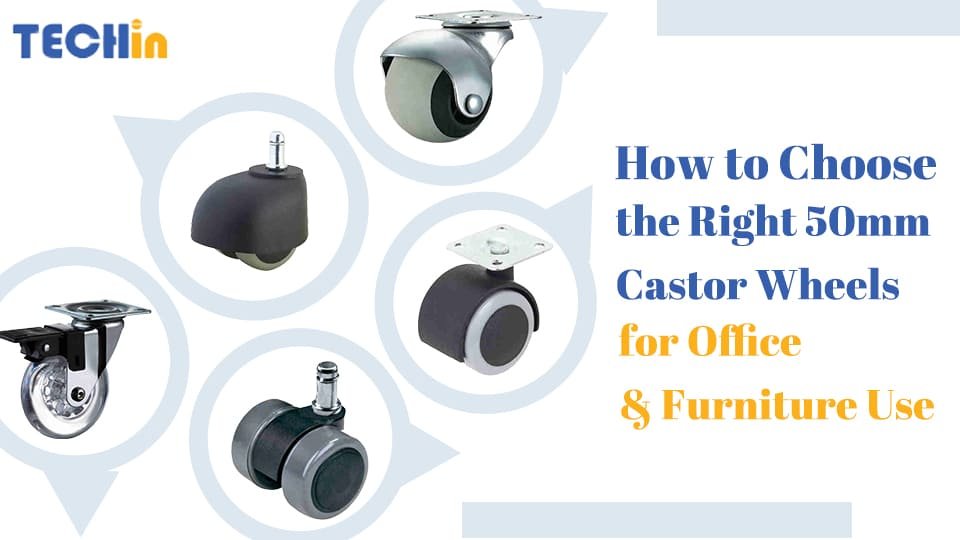
Struggling with castors that scratch floors or roll poorly? This damages your furniture and your reputation. We will help you select the perfect 50mm castor for any application.
To choose the right 50mm castor, first match the wheel material to the floor surface. Use soft wheels for hard floors and hard wheels for carpet. Then, calculate the load capacity and select the correct mounting type, like a plate or stem, for your specific furniture.
Castor wheels are small parts, but they make a huge difference. The wrong choice can ruin floors, make furniture hard to move, and even cause damage. As a castor manufacturer for over 20 years, I have seen it all. We have helped hundreds of businesses, from large distributors to furniture brands, find the perfect mobility solution. This guide will walk you through everything you need to know about the popular 50mm castor, ensuring you make the right choice every time. Let’s get started.
What Are 50mm Castor Wheels?
Confused by all the different castor sizes? A small difference can cause big problems for your furniture design. We make it easy to understand this very popular size.
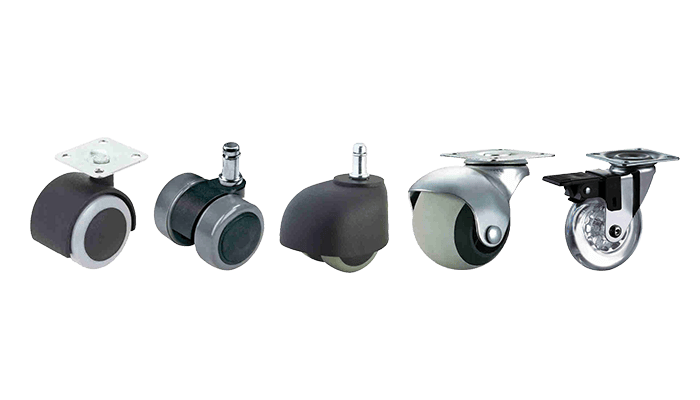
50mm (or 2-inch) castors are a common wheel size for light to medium-duty applications. They offer a great balance of smooth movement, load capacity, and a discreet profile. You can find them on office chairs, small furniture, display racks, and medical carts.
The “50mm” measurement refers to the diameter of the wheel itself. This size is a true workhorse in the furniture and office equipment industry. It is large enough to roll smoothly over small cracks or carpet edges but small enough that it doesn’t overpower the design of a chair or cabinet. I have worked with many clients in Europe, especially in Italy and Germany, and this size is a staple. Its versatility is its greatest strength. You can find a 50mm castor for almost any light-duty job. We manufacture them for a wide range of products, which shows just how adaptable they are.
| Application Area | Common Examples Using 50mm Castors |
|---|---|
| Office Furniture | Office chairs, small filing cabinets, printer stands |
| Home Furniture | Coffee tables, bookshelves, bed frames, plant stands |
| Commercial | Retail display racks, small serving carts, POP displays |
| Medical | IV poles, small instrument trolleys, bedside tables |
Why Should You Choose 50mm Castor Wheels for Your Project?
Overwhelmed by all the castor options available? Choosing the wrong size can add cost and complexity. The 50mm castor is often the most efficient and reliable choice for many needs.
You should choose 50mm castors because they are versatile and balanced. They are big enough for smooth rolling but small enough to look good on furniture. This size also offers a huge range of materials, load capacities, and mounting options for your projects.
The 50mm castor hits a sweet spot. I often explain to my clients that it’s all about balance. A smaller 35mm wheel might be too small and get stuck easily. A larger 75mm wheel might look too industrial for a nice office chair and raise the furniture too high. The 50mm size provides a great balance between mobility and stability. It gives a chair or cart a low center of gravity while still rolling easily. For B2B buyers like distributors, this is a huge advantage. You can stock one primary size that serves many different customers. This simplifies your inventory and purchasing. It’s a smart, efficient choice for both manufacturers and wholesalers.
| Castor Size | Mobility | Aesthetics | Typical Use |
|---|---|---|---|
| < 40mm | Limited, best on very smooth surfaces | Very discreet | Small decorative items |
| 50mm | Good, rolls over small obstacles | Balanced, standard for furniture | Office chairs, furniture, carts |
| > 75mm | Excellent, for rougher surfaces | Industrial, can look bulky | Industrial carts, heavy equipment |
What are the Benefits of Using 50mm Castor Wheels?
Are your products seen as flimsy or hard to move? The right castors can change that perception. 50mm castors offer key benefits your customers will absolutely notice.
The main benefits of 50mm castors are better mobility, good floor protection, and high versatility. They make furniture easy to move. With the right material, they prevent scratches and noise. Their popularity also ensures a stable supply chain for your business.
The benefits of using the right 50mm castor go directly to the end-user, which makes your product better. First, mobility is obvious. A heavy cabinet becomes easy to move for cleaning. Second is floor protection. Using a soft tread 50mm castor on a hardwood floor prevents ugly scratches and reduces noise. This is a huge selling point. Third is versatility. As a manufacturer, we use our 50mm molds to create castors for office chairs, hospital beds, and store displays. This efficiency is key. For my clients, especially those managing large inventories, this means a reliable supply. Because the 50mm size is a global standard, it’s less prone to supply chain shocks. It’s a safe and dependable choice for your business.
- Improved Mobility: Makes furniture and equipment easy to move and reposition.
- Floor Protection: Soft wheel options like TPR or PU prevent damage to hard floors.
- Noise Reduction: Soft tread wheels operate silently, which is crucial in offices and hospitals.
- Supply Chain Stability: As a high-volume standard size, it is widely available.
What are the Common Materials for 50mm Castor Wheels?
Worried about your products causing floor damage or making noise? The wheel material is the most important choice you will make. We will show you the best options available.
Common materials for 50mm wheels include PA (Nylon) or PP (Polypropylene) for soft floors like carpet. For hard floors like wood or tile, a softer material like TPR (Thermoplastic Rubber) or PU (Polyurethane) is best to prevent scratches and reduce noise.
This is the most critical decision. I always tell my clients, “The floor tells you which wheel to use.” A hard wheel on a hard floor will scratch and make noise. A soft wheel on a thick carpet will be hard to push. It’s that simple. For our German customers like Hans, who prioritize quality and performance, we often recommend our high-grade Polyurethane (PU) wheels. They are durable, quiet, and non-marking on any surface. For clients who are more budget-focused but still need quality, Thermoplastic Rubber (TPR) is an excellent choice for hard floors. It offers great protection at a competitive price. Understanding these materials is key to delivering a product that your customers will love.
| Material | Abbreviation | Best For | Pros | Cons |
|---|---|---|---|---|
| Polyamide (Nylon) | PA | Carpet, Rugs | Durable, high load capacity, rolls easily | Noisy and can scratch hard floors |
| Polypropylene | PP | Carpet, Rugs | Cost-effective, good chemical resistance | Can be brittle, not for hard floors |
| Thermoplastic Rubber | TPR | Hardwood, Tile, Laminate | Quiet, non-marking, good floor grip | Lower load capacity than PA |
| Polyurethane | PU | All Surfaces, especially Hardwood | Very durable, non-marking, quiet, long life | Higher cost than TPR or PP |
What are the Key Factors for Choosing the Right 50mm Castor Wheels?
Making the wrong castor choice leads to costly returns and customer complaints. You can avoid these problems by focusing on a few key factors. We will guide you through them.
The key factors are: matching the wheel material to the floor, calculating the needed load capacity for each castor, and selecting the correct mounting type (plate, stem, or grip ring) to fit your furniture. Functionality, like adding a brake, is also important.
Over my 20 years in this business, I’ve narrowed it down to three essential steps. First, as we just discussed, match the wheel to the floor. Second, calculate the load capacity. Use this simple formula: (Weight of Furniture + Maximum Weight of Contents) / Number of Castors. For a chair, use the weight of the chair plus about 120 kg for the person. If the total is 140 kg, you need four castors that can each handle at least 35 kg. Our 50mm furniture castors range from 30 kg to 60 kg capacity. Third, choose the correct mounting. I once had a client in France who ordered thousands of castors with the wrong stem size. We fixed it, but now we always ask clients to measure first. Common types are a flat top plate, a threaded screw stem, or a grip ring stem for office chairs. Getting these three things right solves 99% of problems.
How Do You Choose the Right 50mm Castor Wheels for Your Business?
Are you trying to balance quality, budget, and supplier reliability? This is a common challenge for buyers. We can help you build the perfect castor specification for your business.
For your business, choose a supplier who understands your market’s standards, like European EN norms. Define your needs like application and floor type. Then, request samples to test quality. A good partner offers customization and reliable logistics to get you the right product on time.
Choosing a castor is also about choosing a partner. Your needs as a business are unique. For a purchasing manager in Germany, proof of quality is everything. They need to see test reports that meet EN standards. They value reliability and a long-term partnership. We support this by providing full documentation and leveraging our 20-year experience in the German market. For a business owner in Italy like Lenu, the goal is to find the best quality within a specific budget. Here, our strength as a direct manufacturer with a lean supply chain becomes a big advantage. We provide a one-stop service, from design and molding to final assembly. This controls costs without sacrificing the quality needed for the European market. A good supplier listens to your needs and provides a solution, not just a product.
| Your Business Checklist | What to Ask Your Supplier | Why It Matters for Your Business |
|---|---|---|
| Certifications & Testing | Do you have EN, BIFMA, or RoHS test reports? | Ensures the product is safe and meets market standards. |
| Customization Options | Can you add my logo or produce a custom color? | Strengthens your brand identity and product value. |
| Logistics to Your Country | What are your shipping terms and lead times to Europe? | Avoids delays and unexpected costs, ensuring smooth operations. |
| MOQ & Pricing | What are your Minimum Order Quantities and price breaks? | Helps you manage your inventory and procurement budget effectively. |
How Do You Properly Maintain 50mm Castor Wheels?
Even the best castors can fail without proper care. This can lead to safety issues and costly replacements. Simple maintenance can extend their life and performance significantly.
To maintain 50mm castors, regularly clean the wheels and housing to remove hair, dust, and debris. Check that all fasteners are tight. If needed, lubricate the swivel bearing and axle with a light silicone-based spray to keep them rolling smoothly.
We build our castors to last, but a little care goes a long way. This is advice we give all our B2B clients to pass on to their customers. The biggest enemy of a castor is hair and dirt. It gets wrapped around the axle and stops the wheel from turning.
Here is a simple plan:
Monthly: Look at the castors. Use a cloth or small brush to wipe away dust. Pull out any tangled hair or string from around the wheel axle. This is the most important step for office chairs.
Every Six Months: Check that the castors are still attached securely. If it’s a top plate, make sure the screws are tight. If it’s a stem, make sure it’s fully inserted. A wobbly castor is a dangerous castor.
As Needed: If the wheel or the swivel becomes stiff or squeaky, it’s time for lubrication. Use a light silicone spray. Avoid heavy grease, which attracts more dirt. A quick spray in the swivel bearing and on the axle will make it feel like new.
Conclusion
Choosing the right 50mm castor means matching the wheel to the floor, calculating the load, and picking the right mount. A good supplier makes this process simple and guarantees quality.