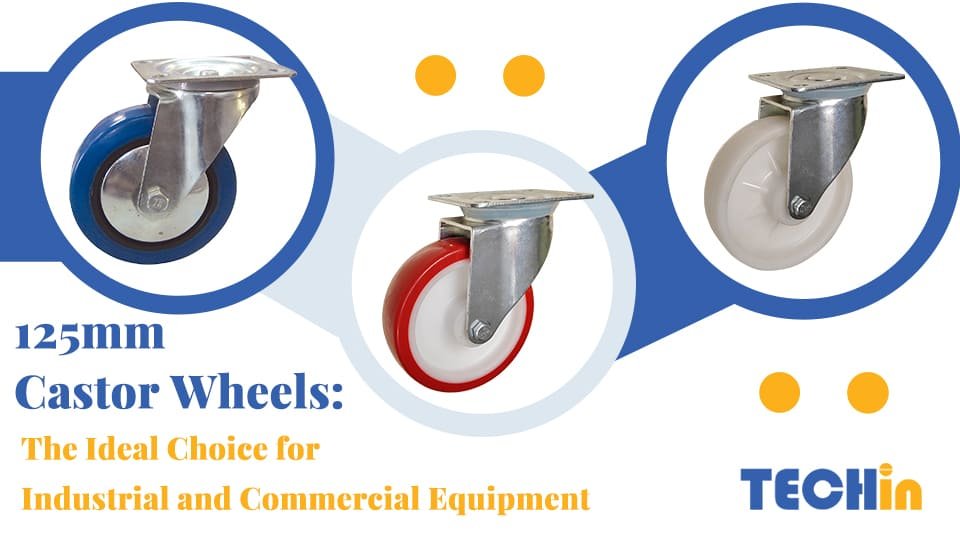
Choosing the wrong castor causes delays and damage. This costs you money and reputation. 125mm castors offer the perfect balance of strength and mobility, solving these problems effectively.
125mm castor wheels are a versatile choice for industrial and commercial equipment. They offer a great balance of load capacity, typically from 100kg to 500kg, and smooth rolling. Their size is ideal for navigating common workplace obstacles, making them efficient and reliable for various applications.
That’s the short answer. But the real value of these castors comes from understanding the details. For over 20 years, I’ve helped businesses across Europe find the perfect mobility solutions. Let’s explore what makes the 125mm size so special and how you can choose the right one for your specific needs. It’s simpler than you think.
What Are125mm Castor Wheel?
Confused by castor sizes and technical terms? Choosing the wrong one can halt your project. We simplify it for you, so you can buy with confidence and avoid costly mistakes.
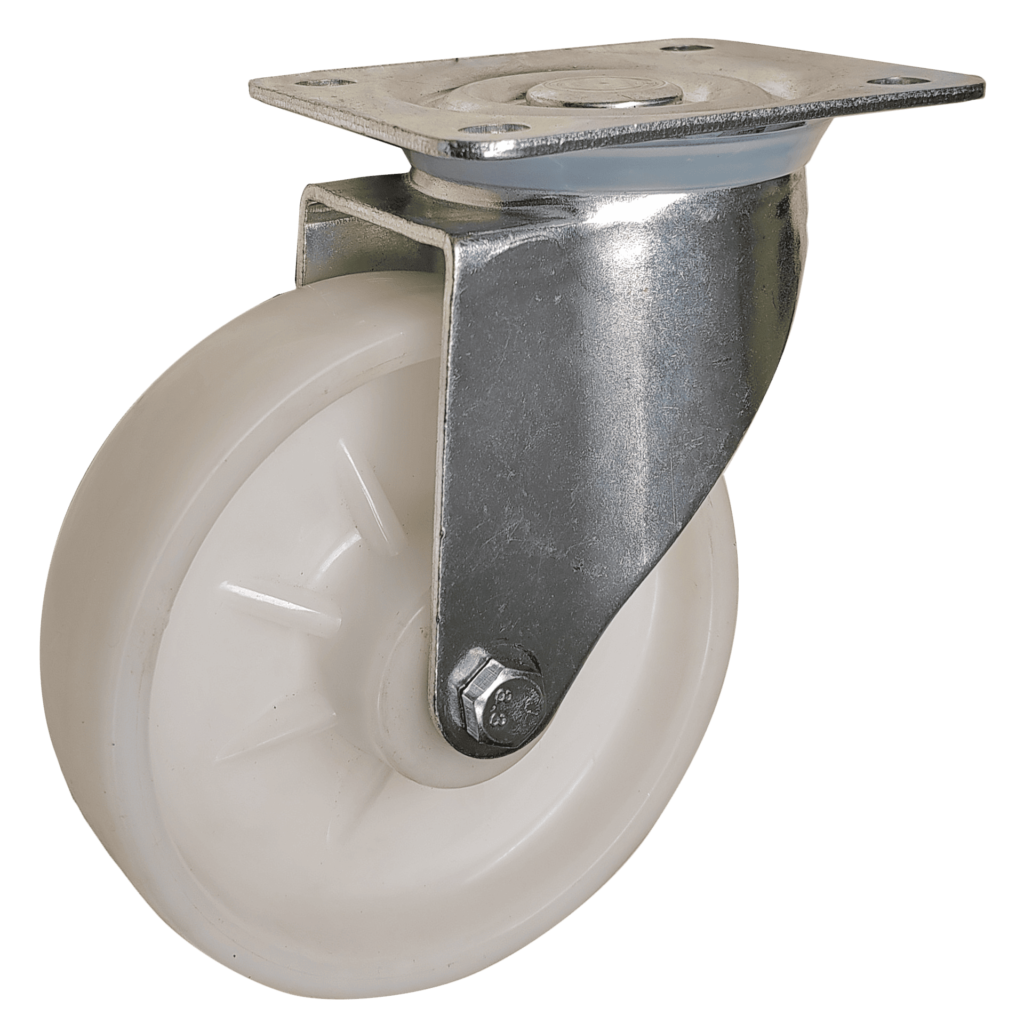
A 125mm castor wheel has a wheel diameter of approximately 5 inches. It’s a mid-size option that bridges the gap between smaller furniture castors and very large, heavy-duty wheels. This size is popular for its versatility in load capacity and maneuverability across various floor types.
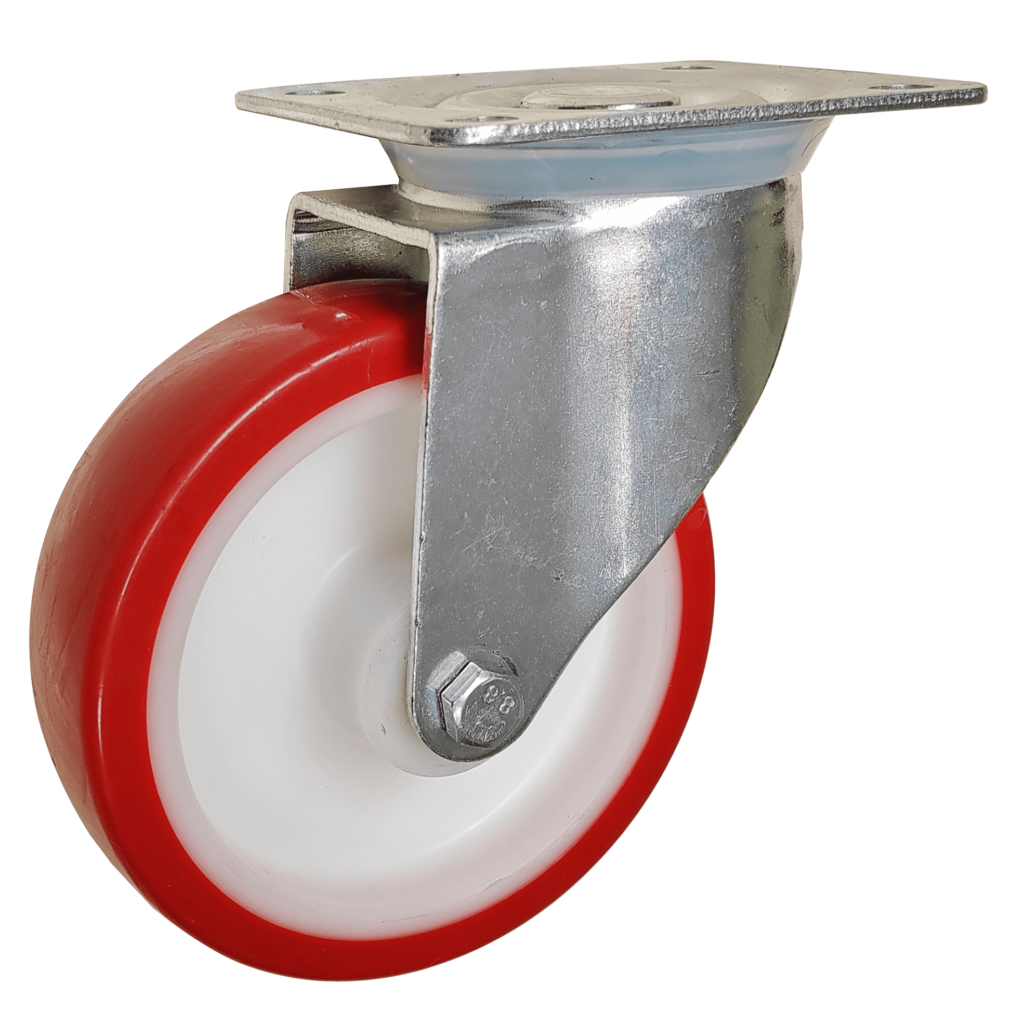
When we talk about a 125mm castor, we are referring to the diameter of the wheel itself. But a complete castor unit is more than just the wheel. It includes a few key parts that work together. First is the bracket, also called the housing or fork, which holds the wheel. This bracket comes in three main types:
- Fixed (or Rigid): This bracket does not turn, so the wheel only moves in a straight line, forward and backward. It provides great stability for long, straight paths.
- Swivel: This bracket can rotate 360 degrees. This allows you to turn and maneuver equipment easily, which is perfect for tight spaces.
- Braking: This is usually a swivel castor with an added locking mechanism. The brake can lock the wheel from rolling, the swivel from turning, or both. This is essential for safety when you need to park a cart or piece of equipment.
Inside the wheel is the bearing, which helps it spin smoothly. The combination of wheel size, material, bracket type, and bearing determines the castor’s final performance.
Why Should You Choose 125mm Castor Wheels for Your Project?
Your equipment needs to move smoothly and safely. The wrong wheels cause frustration and inefficiency. 125mm castors provide the perfect balance of size, strength, and smooth rolling.
You should choose 125mm castor wheels because they offer an ideal blend of performance. Their size is large enough to roll over small cracks and debris easily, but not so large that it makes equipment bulky. This results in excellent maneuverability and a stable load capacity.
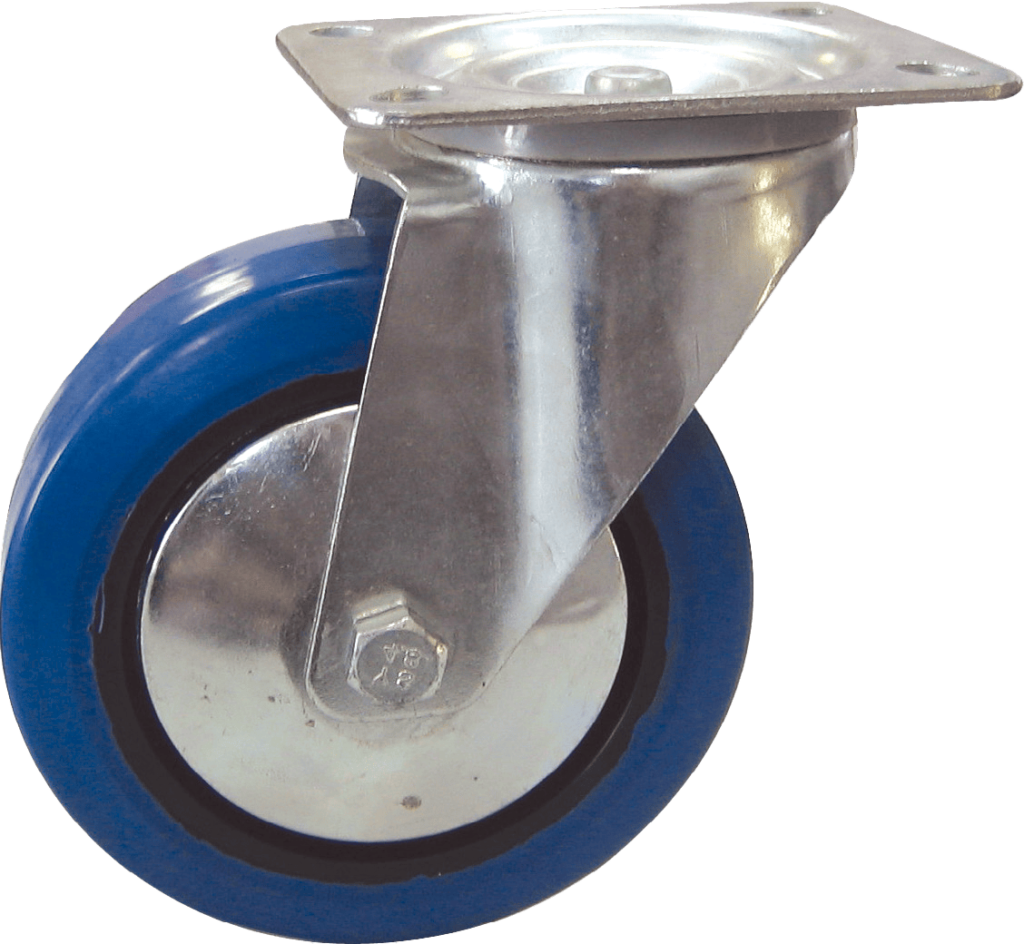
I often tell my clients to think of the 125mm wheel as the “sweet spot” in the world of castors. It’s a lesson I learned early on when a client in France was struggling with small 75mm wheels on their workshop carts. The wheels kept getting stuck in floor cracks, making the carts difficult and dangerous to push. We switched them to 125mm wheels, and the problem disappeared overnight. The larger diameter allowed the wheels to roll right over imperfections.
On the other hand, very large wheels, like 200mm, can be overkill. They add significant height to equipment and can be less responsive in tight turns. The 125mm size provides the benefits of a larger wheel without these drawbacks. Here is a simple breakdown:
| Feature | Small Wheels (e.g., 75mm) | 125mm Wheels | Large Wheels (e.g., 200mm) |
|---|---|---|---|
| Rollability | Poor on uneven surfaces | Good over cracks, debris | Excellent on rough terrain |
| Maneuverability | Very high | High | Lower in tight spaces |
| Load Capacity | Low | Moderate to High | Very High |
| Added Height | Low | Moderate | High |
This balance makes 125mm castors incredibly versatile for factory trolleys, material handling carts, and medium-duty machinery.
What are the Benefits of Using 125mm Castor Wheels?
Equipment that’s hard to move slows down your entire operation. This inefficiency costs time and money. 125mm castors improve workflow by making everything mobile, safe, and easy to handle.
The key benefits include enhanced mobility, moderate load capacity, and versatility. They improve ergonomic safety by making equipment easier to push. Their wide range of material options also means you can find a perfect match for any environment, from a quiet hospital to a rugged factory floor.
Let’s break down these benefits into practical advantages for your business. First is operational efficiency. When your carts and equipment move smoothly, your staff can transport materials faster and with less effort. This directly translates to better productivity. A client of ours in Germany, Hans, manufactures material handling equipment. He switched to our 125mm PU castors and found that his customers could move loads 15% faster because the push effort was much lower.
Second is safety and ergonomics. A wheel that rolls easily over obstacles reduces the physical strain on your employees. This lowers the risk of workplace injuries from pushing or pulling heavy, stubborn carts. A smooth-rolling wheel is a safe wheel.
Third is floor protection. With the right material, like soft rubber or polyurethane, 125mm wheels can carry significant weight without marking or damaging your floors. This saves you money on floor repairs in the long run. Finally, their versatility is a huge benefit. You can use the same size wheel across many different types of equipment, from warehouse trolleys to medical carts, which simplifies your inventory and purchasing.
What are the Common Materials for 125mm Castor Wheels?
Choosing the wrong wheel material can destroy your floors or fail under load. This is a costly mistake. We can help you select the right material for your specific needs.
Common materials include Polyurethane (PU) for all-around durability, Thermoplastic Rubber (TPR) for quiet operation, and Nylon (PA) for high load capacity. Rubber is great for grip, while Polypropylene (PP) is a cost-effective choice for lighter applications. Each has unique benefits.
The material of the wheel is perhaps the most critical choice you will make. It affects everything from load capacity and rolling ease to noise level and floor protection. Over my 20 years in this business, I’ve seen every possible application, and I can tell you there is a perfect material for every job. For our clients in Europe, who value quality and adherence to standards, getting this right is non-negotiable.
Here is a simple guide to the most common materials we offer for 125mm wheels. I often share this with new buyers to help them clarify their needs.
| Material | Key Features | Best For |
|---|---|---|
| Polyurethane (PU) | Durable, non-marking, resistant to oils and chemicals. A great all-rounder. | Warehouses, factories, general industrial use on smooth concrete. |
| Thermoplastic Rubber (TPR) | Very quiet, shock-absorbing, protects floors well. | Hospitals, offices, institutional settings where noise is a concern. |
| Nylon (PA) | Very high load capacity, high impact resistance, easy to roll. | Heavy industrial applications, carpeted surfaces, clean environments. |
| Rubber | High grip, excellent on rough surfaces, absorbs shock. Can mark floors. | Outdoor use, workshops with uneven floors, moving heavy loads. |
| Iron Core + PU/Rubber | Combines the strength of an iron hub with the benefits of a softer tread. | Heavy-duty applications requiring both strength and a smooth ride. |
Choosing the right one depends entirely on your specific environment and application.
How Do You Choose the Right 125mm Castor Wheels for Your Business?
Buying the wrong castors leads to returns, delays, and unhappy customers. This hurts your bottom line. I’ll give you a simple checklist to make the right choice every time.
To choose the right 125mm castors, first determine your required load capacity per wheel. Then, consider your floor type and environment to select the best material. Finally, decide if you need a fixed, swivel, or braking function for proper control and safety.
I always walk my clients, like Lenu from Italy who needs top quality on a tight budget, through a simple four-step process. This ensures they get exactly what they need without overspending.
Step 1: Calculate Your Load Capacity
This is the most important step. Take the total weight of your cart or equipment and add the maximum weight of the load it will carry. Then, divide that total number by the number of castors you will use. I always recommend dividing by 3, not 4, for a four-wheel cart. This creates a safety margin because a cart on an uneven floor might only have three wheels touching the ground at one time.(Weight of Cart + Max Load) / 3 = Required Load Capacity Per Castor
Step 2: Analyze Your Floor and Environment
Look at where the castor will be used. Is the floor smooth concrete, tile, or rough asphalt? Are there chemicals, oils, or water present? Is noise a concern? Your answer will point you to the right wheel material from the table in the previous section.
Step 3: Select the Housing Type
Think about how the equipment needs to move. Does it need to travel in long, straight lines? Use fixed castors. Does it need to navigate tight corners? Use all swivel castors, or two swivel and two fixed for a combination of steering and stability. Do you need to park it securely? Be sure to add braking castors.
Step 4: Consider the Details
Finally, think about bearings. Ball bearings offer the easiest and smoothest roll, which is great for ergonomics. Roller bearings are durable and good for heavy loads. Following these steps will lead you to the perfect castor every time.
How Do You Properly Maintain 125mm Castor Wheels for a Longer Life?
Worn-out castors can fail unexpectedly, causing accidents and downtime. This is a preventable risk. Simple maintenance can double the life of your wheels and keep your workplace safe.
To maintain your castors, regularly clean the wheel and bracket to remove debris like hair and dirt. Check for wear and tear on the wheel tread. Also, inspect the swivel raceway and axle for tightness, and apply grease to bearings periodically to ensure smooth operation.
Proper maintenance is something that detail-oriented customers like Hans in Germany really appreciate. It protects their investment and ensures reliability. It doesn’t take much time, but it makes a huge difference in the performance and lifespan of your castors. A little care prevents big, costly problems down the road.
I suggest a simple schedule for my clients:
- Weekly Check: Do a quick visual inspection. Look for string, hair, or other debris wrapped around the axle. This is the most common cause of rolling problems. Pull it out before it builds up and causes damage.
- Monthly Check: Take a closer look. Check the tightness of the axle nut and the mounting bolts. A loose castor is an unsafe castor. Also, wipe down the wheel and bracket to remove any accumulated dirt and grime. Check the wheel tread for flat spots or excessive wear.
- Annual Service: For castors in heavy use, it’s a good idea to perform a more thorough service once a year. This involves lubricating the swivel bearing raceway and the wheel bearing. A small amount of grease will keep them rotating freely and quietly. If a wheel is significantly worn or damaged, now is the time to replace it.
This simple routine will keep your equipment rolling smoothly and safely for years to come.
Conclusion
In short, 125mm castors offer a powerful, versatile solution. Choosing the right one is simple when you consider load, floor, and function. We are always here to help you.